


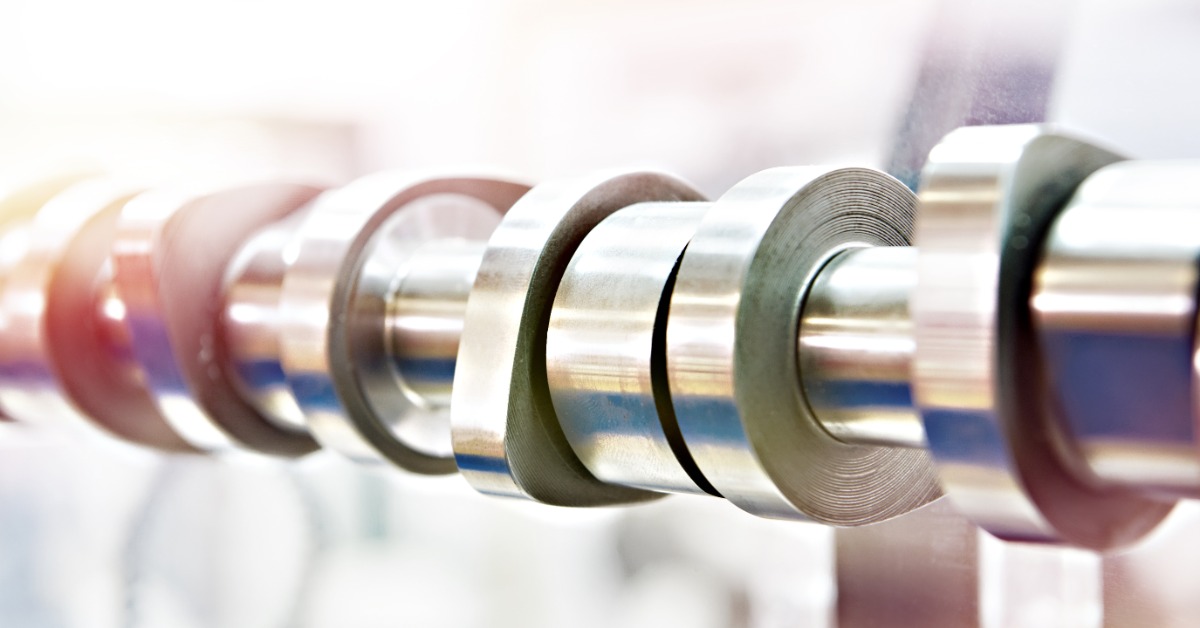
A camshaft can leave the grinding machine looking flawless. Its lobes have crisp contours, and the surface catches the light beautifully. Yet a little too much heat during the final passes can turn that impressive finish into an expensive problem.
Grinding gives camshafts the precise profiles needed to control engine valves. It also creates friction where fast-moving abrasive grains contact metal. When that friction raises temperatures too high, damage can develop beneath a surface that still looks polished. Understanding why helps machinists avoid costly surprises after assembly. Here’s how grinding heat can ruin a perfect camshaft.
Why Camshaft Precision Counts
Each cam lobe determines when an engine valve opens and how far it moves. The lobe’s shape influences the valve’s motion throughout each rotation, so even small deviations can affect performance. Grinding refines the lobe’s shape after earlier machining and heat-treatment steps.
Many camshafts need hardened surfaces to withstand repeated contact with lifters or followers. That combination creates a challenge. Machinists need to remove enough metal for an accurate profile without disturbing the properties that help the lobe resist wear. A smooth finish means little if the surface underneath can’t survive its working conditions.
Where the Heat Begins
Grinding wheels carry countless abrasive grains that cut tiny chips from the workpiece. Ideally, sharp grains slice through the metal efficiently. Dull grains rub or plow instead, converting more of the machine’s energy into heat.
A heavy grinding pass can increase the thermal load, especially when the wheel remains in contact with the lobe for too long. Poor coolant delivery allows temperatures in that narrow contact zone to climb further. Heat concentrates in a small area. The rest of the camshaft may feel cool even as one spot reaches damaging temperatures.
Heat Can Change Hardness
Hardened steel doesn’t always respond kindly to unexpected heating. Depending on the camshaft material and its previous heat treatment, excess grinding heat can temper the surface and reduce its hardness. A softer patch may wear faster when the cam follower repeatedly crosses it.
More severe heating can alter the surface structure in another direction. Under certain conditions, the metal can harden again as it cools, leaving a brittle layer vulnerable to cracking. Both outcomes undermine the careful processing that gave the component its intended durability.
Manufacturers who control grinding temperatures can make industrial components last longer by preserving the properties that support dependable service.
Stress Can Lead to Cracks
Heat doesn’t spread evenly through a cam lobe. The outer layer warms first, while the metal beneath it remains cooler. As those areas expand and contract differently, the surface can develop unwanted tensile residual stress.
Those stresses can encourage cracks, particularly when the grinding process also changes the metal’s structure. Even a tiny crack deserves attention. Every engine cycle puts the lobe through another round of loading, giving an existing defect opportunities to grow.
The frustrating part is that a camshaft may meet its dimensional targets and still carry this hidden weakness. Accuracy and durability require separate checks.
Burn May Hide in Plain Sight
Machinists often use the term grinding burn for thermal damage at or beneath a ground surface. Darkened patches or unusual discoloration may raise suspicion, but color alone can’t confirm the condition. Some damaged surfaces show almost no obvious visual warning.
That makes a polished lobe a poor substitute for inspection. If a shop notices higher grinding power, inconsistent results, or sudden changes in wheel behavior, the team should investigate rather than simply finish the batch. Catching the cause early protects more than one camshaft. It can prevent an entire production run from repeating the same defect.
Keep the Wheel Cutting
A sharp grinding wheel removes metal instead of dragging across it. Over time, grains dull while chips clog spaces between them. Both problems increase rubbing and make heat harder to control.
Proper dressing restores the wheel’s cutting condition and opens space for chips to escape. However, dressing too finely can leave the wheel face unusually closed, raising friction again. The ideal approach depends on the wheel’s bond and abrasive type.
Monitor wheel condition throughout production rather than waiting for a visibly poor finish. A consistent dressing routine helps operators keep the process predictable as parts move through the machine.
Aim Coolant at the Cut
Coolant can’t help much if it misses the area generating the heat. Direct the nozzle toward the grinding contact zone and maintain the flow the process requires. A misplaced stream may wet the surrounding machine while barely reaching the active cutting area.
Coolant also carries grinding debris away from the wheel and workpiece. Inspect nozzles for blockage, maintain filtration, and monitor fluid condition according to the coolant supplier’s instructions. Even a small change in delivery can alter how the wheel cuts.
Don’t assume that increasing coolant volume automatically fixes every problem. Proper placement and wheel compatibility deserve equal attention when troubleshooting thermal damage.
Select Abrasives With Care
Abrasive choice influences how much cutting energy becomes heat. Cubic boron nitride, or CBN, offers exceptional hardness and strong performance when grinding many hardened ferrous materials. Its ability to retain cutting edges makes it a valuable option for demanding camshaft operations.
When manufacturers use CBN abrasive powder for camshaft grinding, they generally incorporate the grains into an engineered grinding wheel with a suitable bond. They don’t simply sprinkle loose powder onto the camshaft. Grain size and wheel construction both affect cutting action, so specifications should match the camshaft material and finishing requirements.
CBN isn’t a shortcut around process control. Even a premium wheel needs proper operating settings and coolant delivery to protect the finished surface.
Find the Right Cutting Balance
It might seem that a lighter pass always creates less heat, but grinding isn’t quite that simple. An excessively shallow cut can encourage grains to rub rather than form clean chips. Aggressive infeed, meanwhile, can overload the contact zone.
Review wheel speed and workpiece speed together with material removal rate. The best combination allows efficient cutting without excessive thermal exposure. Adjust one parameter at a time, then examine how the change affects power demand and surface quality.
Machine vibration or an unstable setup can add another complication. Stable support helps operators maintain the lobe profile.
Look Beyond the Finish
Before releasing camshafts, verify more than their dimensions and appearance. A shop can use suitable hardness checks or qualified grinding-burn inspection methods to investigate possible thermal damage. For critical applications, specialists may also evaluate residual stress or inspect for surface cracks.
Choose methods that fit the camshaft alloy and production requirements. A check that works for one material may not reveal the same defects in another. If inspection uncovers damage, evaluate the part against its engineering limits rather than assuming another polishing pass will fix it. Removing metal can’t always restore compromised hardness or eliminate cracking.
Protect the Work Behind the Polish
Grinding heat can ruin a perfect camshaft by changing the hardened surface that earlier manufacturing steps carefully created. These changes can weaken the component long before anyone spots a visible flaw.
Keep the wheel sharp, deliver coolant where it belongs, and match grinding settings to the metal. Just as importantly, inspect the finished lobes for problems that a beautiful shine might conceal. Those habits help a perfectly ground camshaft perform as well as it looks.