


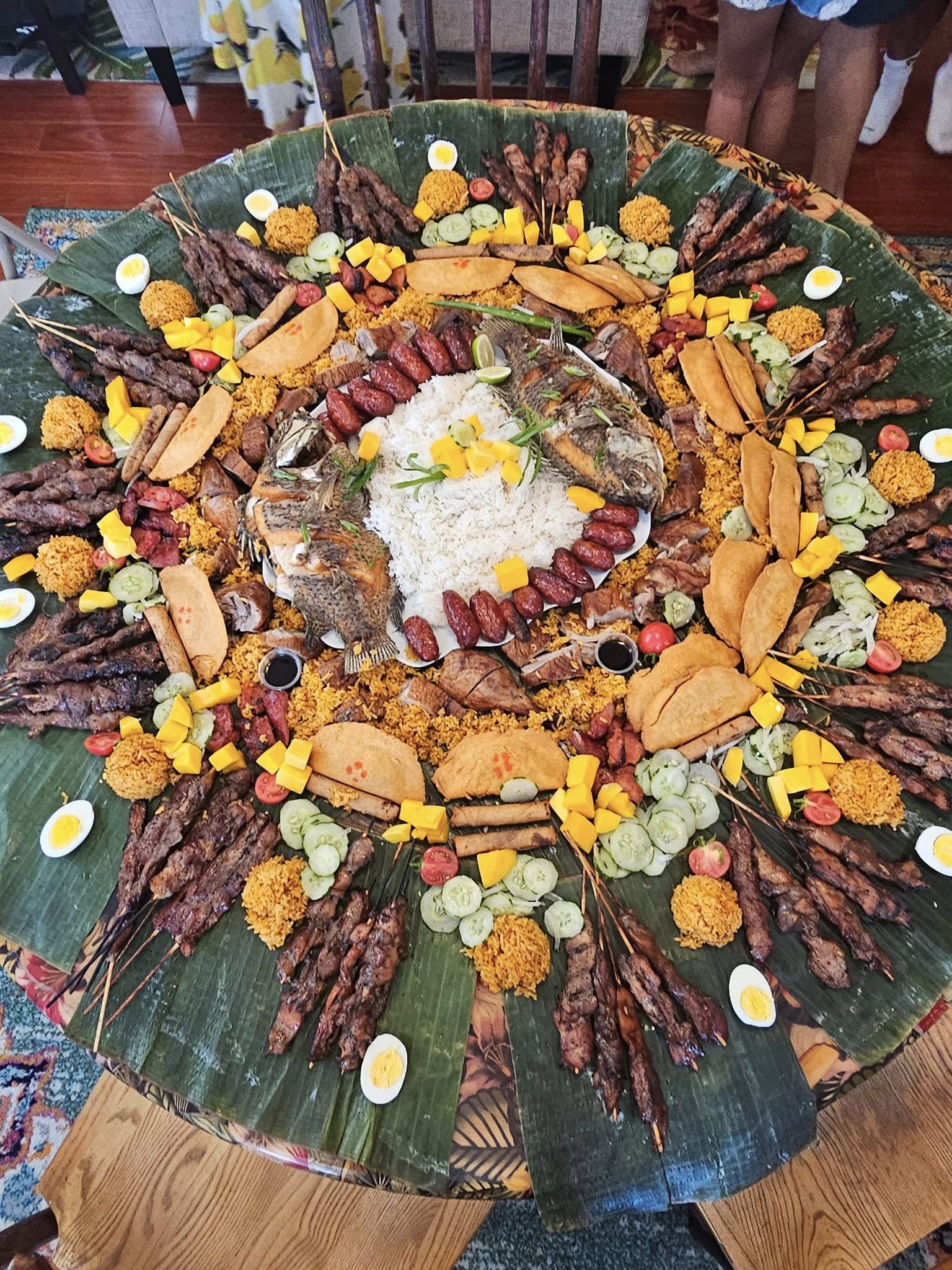
Few dining experiences capture the warmth, joy, and togetherness of Filipino culture like a kamayan feast. The word kamayan comes from the Tagalog word kamay (hand), and it refers to the traditional Filipino way of eating with your hands. Today, kamayan is often celebrated as a festive and communal dining style, with an abundant spread of food laid out on banana leaves for everyone to share.
If you’ve ever wanted to host one yourself, here’s a step-by-step guide to setting up a kamayan table that will impress your guests and bring everyone together.
Step 1: Gather Your Essentials
- Banana leaves – These are the heart of the kamayan setup. They’re used as your natural table covering and dining surface. If you can’t find fresh banana leaves, many Asian supermarkets carry frozen ones.
- Long table or flat surface – A kamayan feast is best enjoyed at one long table so everyone can sit side by side.
- Serving bowls/trays (optional) – For sauces, dips, and certain dishes that might be too saucy to put directly on the leaves.
Step 2: Prepare the Banana Leaves
- Wash the banana leaves thoroughly, then pat them dry.
- To make them pliable and shiny, briefly run them over low heat (like over a stove flame) or steam them. This will also help release their aroma.
- Lay the leaves across the length of your table, overlapping them slightly so no gaps show. The leaves themselves will act as your “plates.”
Step 3: Build the Feast
Traditionally, rice is laid down first as the foundation. From there, layer on proteins, vegetables, and fruits in generous portions. Here are some common elements of a kamayan spread:
- Rice – White steamed rice or garlic fried rice as the base.
- Proteins – Grilled fish, crispy pork belly (lechon kawali), fried chicken (manok), or barbecued skewers.
- Seafood – Shrimp, mussels, squid, or crabs add color and indulgence.
- Vegetables – Grilled eggplant, sautéed green beans, or pinakbet (mixed vegetables).
- Fruits – Mangoes, pineapples, or tomatoes for freshness and sweetness.
- Condiments – Vinegar dips (sawsawan), soy sauce with calamansi, bagoong (shrimp paste), or spicy chili sauces.
Arrange the food in sections across the table so everyone can reach a little of everything. Think of it as painting a colorful, edible canvas.
Step 4: Invite Everyone to Dig In
No forks, no spoons—just clean hands! Before eating, everyone should wash their hands thoroughly. The etiquette is simple: use your fingertips to scoop rice and dishes together into small portions, then gently push the food into your mouth with your thumb.
Step 5: Make It Festive
Kamayan is more than just food—it’s about gathering and celebrating. Add to the atmosphere with:
- Filipino music in the background
- Bright woven placemats or table runners under the banana leaves
- Tropical drinks like calamansi juice or buko (coconut) water
Sample Kamayan Menu
Here’s a starter menu that’s festive, easy to prepare, and guaranteed to impress your guests.
? Garlic Fried Rice
- Cooked jasmine rice
- Garlic (lots of it, minced)
- Oil, salt, pepper
? Sauté garlic until golden, add rice, season, and toss until fragrant.
? Grilled Pork Belly (Inihaw na Liempo)
- Pork belly slices
- Marinade: soy sauce, calamansi (or lime), garlic, black pepper
? Marinate 2–4 hours, grill until crispy and smoky.
? Garlic Butter Shrimp
- Shrimp (head-on for more flavor)
- Garlic, butter, soy sauce, a little sugar
? Sauté garlic in butter, add shrimp, season, and cook until pink.
? Whole Grilled Fish (Inihaw na Isda)
- Whole tilapia or pompano
- Stuffing: tomatoes, onions, ginger
? Season with salt and pepper, stuff cavity, grill until skin is charred and meat flakes easily.
? Grilled Eggplant with Bagoong
- Long eggplants
- Shrimp paste (bagoong), tomato, onion, calamansi
? Grill eggplants until soft, peel skin, serve with bagoong and fresh toppings.
? Dessert: Mango Float
- Ripe mangoes, graham crackers, whipped cream, condensed milk
? Layer graham crackers, cream mixture, and mangoes in a dish. Chill overnight for best results.
Final Touch
Once everything is ready, line your table with banana leaves, build your feast, and watch the magic happen as everyone gathers around. A kamayan meal isn’t just about eating—it’s about slowing down, connecting, and celebrating the joy of sharing.