


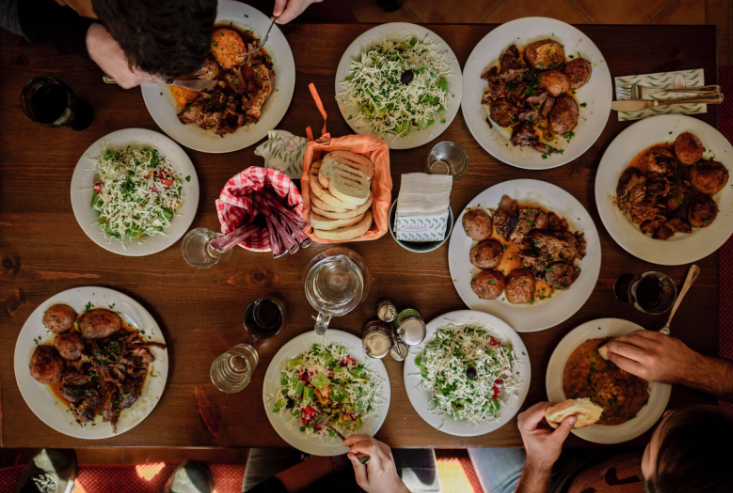
Family celebrations are held in the balance between the past and present. There are the ways that things are supposed to go vs. the way that they are usually observed. Blending tradition with modernity is something that families struggle with.
The good news is that it is possible to celebrate in a way that is not burdensome and still true to its roots and heritage.
Why It’s More Important Now
Families are not what they used to be. They are often spread out over different cities, countries, and continents. Work lives may also be different. Family members can also have many different dietary needs. However, families want to make sure that they keep their culture alive, and still share it with younger generations who may not have grown up observing some (or all) traditions.
This can make family celebrations tricky. Everyone wants to make sure it’s done correctly. However, what “correctly” means for one family member may differ significantly from what another thinks it should be. The older generations do not want to disappoint by failing to capture what these celebrations should be honoring. The younger generations want to see how they can implement the traditions into their ever-changing lives.
Concentrate on What’s Important
Not all components of a cultural celebration are equally important. Some of those components may have once been obligatory but may now not be as relevant as it once was. It may also be that some parts of the celebration are more ceremonial than others.
Food is one component to consider. Food usually accompanies celebrations for a reason. Certain dishes represent certain hopes, wishes, or goals for the upcoming year (or designated period). Other aspects may have just been the easiest way to solve a long-standing issue (like congregating everyone together). The former merits more attention than the latter.
When preparing for an important celebration like CNY 2026, it can be helpful for families to sit down and think about what makes the particular celebration special and different from other get-togethers. The goals and meanings behind the celebration can usually be restructured around the other less significant elements of the celebration.
Food that has specific significance for the celebration can remain, but other elements that make planning the food celebration more flexible can be altered.
Make Everyone Feel Welcome
One of the most significant challenges the celebration faces today is being inclusive while still maintaining the meaning behind (and customs associated with) the celebrations. Family members can have unique dietary preferences, restrictions, allergies, and (particularly younger family members) differing comfort levels with specific activities.
The best families deal with this challenge by thinking in terms of “and” instead of “or”. The older generations do not want to alienate anyone from the celebration. This means including people (and their variety of needs) instead of only catering to some.
There are plenty of ways to include all family members in a celebration instead of only a select few. This can be achieved by finding ways for everyone to feel included. This may mean accommodating dietary restrictions by providing specific options for food while also having the particular dishes that have significance to the celebration. This also applies to planned activities as well.
It may be separating younger and older family members into different (but still acknowledged) groupings during specific activities.
Be Intentional About Planning
One thing that feels like it happens without effort requires a lot of effort and planning. These planning sessions can be less rigid and “clinical” than usual planning but should also not negate functionality.
Though things can feel like they “just happen,” a lot of planning is often taking place behind the scenes. Planning can be beneficial for enhancing the events themselves. Thus, it can be fun instead of simply delegating tasks, making lists, etc.
Planning can even (and often should) occur on two different levels. There is the grand level that can be presented to all relevant family members (if applicable). There is also the case-specific individual level that can help instigate and sustain pleasant family gatherings.
Modern families have various conveniences their grandparents’ parents did not. Group chats can assist with planning family updates and announcements. Food can also be ordered online.
Embrace Some New Traditions
Sometimes the best way to honor a tradition is to find ways that it can blend with new traditions instead.
Family celebrations that elegantly combine the new and old embrace newer traditions in existing ones instead of attempting to override them. The newer components do not automatically overpower the older customs and practices; they get added on.
This may mean adding dishes that reflect modern preferences while keeping certain important foods from the past. Celebrations may accommodate music that younger family members enjoy while honoring music that older generations feel nostalgic toward.
Family celebrations can also include dedicated periods during which family members share their gratitude for the celebration, thereby fostering cross-generational understanding and discussion of what they appreciate about it.
Celebrations that blend tradition and modernity do not have to mean compromises that please none of the relevant parties. It instead means providing unique solutions that reflect where it all started, while still embracing where everyone is now (in life). Family celebrations do not need to give up their past; they require balance to maintain a presence that feels both rooted and modern.