

What A5 and B6 actually are
- A-series paper (like A5) is part of the ISO 216 paper standard used almost everywhere except the U.S. and Canada. It’s built so each size halves into the next one while keeping the same shape (that nice ?2 ratio).
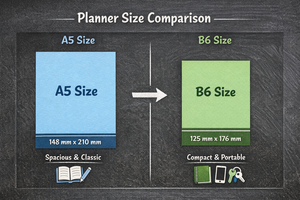
- An A5 sheet measures about 148 × 210 mm — roughly the size of a standard planner most of us know and love. Think of this as a normal letter (US) and folded in half.
- The B-series paper also follows ISO 216 but sits between the A sizes in area. So a B6 sheet is smaller than an A5 yet larger than an A6 — about 125 × 176 mm.
My shift from A5 to B6: the personal side
A5 felt a bit too big
When I was out and about — coffee shops, transit, quick note-taking — hauling around a full A5 felt… heavy. Not unbearable, but definitely noticeable. That’s where B6 started to look tempting.
I write smaller anyway
If most of my text fits nicely in a tighter layout, why leave so much blank space on the page? B6 isn’t tiny — it still gives room to write and decorate — but it forces intentional page use (in a good way).
B6 planners have a certain vibe
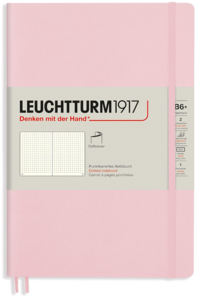
There’s something about a more compact format that just feels lighter. It’s easier to carry, easier to flip through, and — aesthetically — just… cozy. I’m loving this LEUCHTTURM1917.
It fits better in everyday bags
Honestly, this was a game-changer: my phone, wallet, keys, and a B6 planner fit without thinking twice. A5 always felt like I was dedicating a whole tote to just my planner.
Great for planners who use multiple inserts
If you mix and match — calendars, trackers, notes — a smaller size prevents the whole thing from getting bulky.
A quick recap:
|
A5
|
148 × 210 | Spacious, classic, great for lots of writing |
|
B6
|
125 × 176 | Compact, portable, perfect everyday carry |
Final thoughts