


Your car’s paint takes hits every day, but the biggest damage often comes from the daily weather you’re driving in. If you want your finish to stay glossy and clean, you need to know the seasonal threats that can damage your car’s finish—and how to stop small problems from turning into permanent marks.
Spring: Pollen, Sap, and Surprise Storms
Spring looks harmless, but it attacks your paint in sneaky ways. Pollen lands like dust, then mixes with rain and creates a gritty film. If you wipe it off dry, you can drag tiny particles across the clear coat, leaving micro-scratches.
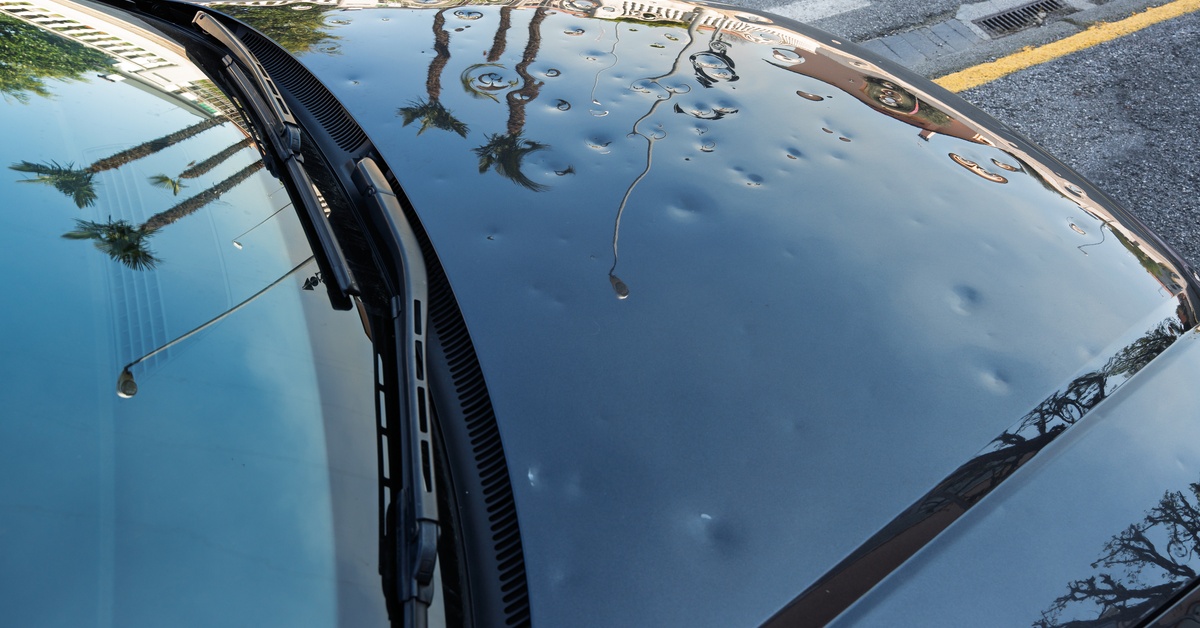
Spring storms add another issue: wind-driven debris. Tiny twigs, dirt, and road grit can pepper the front end and hood during a single rough commute. This is why you need to protect your car from bad weather: debris from these storms can leave lasting marks from a single car ride.
Summer: Sun, Bugs, and Tar on Hot Pavement
Summer sun fades paint and weakens the clear coat over time. UV rays break down the surface, which makes colors look dull and tired. Dark vehicles show it first, but every paint color takes a hit.
Bug splatter causes another warm-weather headache. Insect residue contains acids that can quickly stain paint, especially after a highway drive. Let it sit for a weekend, and you may end up with etched marks that stay even after a wash. Summer road work adds tar and fresh asphalt oils, which fling onto rocker panels and lower doors.
Fall: Leaf Tannins, Mud, and Early Frost
Fall drops leaves everywhere, and wet leaves create real paint trouble. Leaves release tannins—natural compounds that can stain the clear coat. If a pile of damp leaves sits on your hood overnight, you might wake up to a shadowy outline.
This season also brings more mud and grit. Rain mixes with dirt and splashes onto your lower body as you drive. That grime can act like sandpaper during washes if you skip a pre-rinse. Early frosts create another problem: quick temperature swings. As surfaces expand and contract, small chips and scratches can worsen, especially if you ignore them until winter.
Winter: Salt, Ice, and Rough Cleaning Habits
Winter hits hardest in many regions because roads collect salt, brine, and gritty slush. Salt speeds up corrosion and can leave stubborn residue on paint. Slush also hides tiny stones that blast your lower panels like a pressure washer filled with gravel.
For drivers who live in cold, snowy areas like Chicago, even scraping ice off your vehicle can cause damage. Scrapers and stiff brushes can create small abrasions on your paint. That is why Chicago drivers need paint protection year-round, to prevent these seasonal issues from creating serious problems.
Building a Finish That Survives Every Season
Realistically, your car faces seasonal threats that can damage your car’s finish every month of the year. That reality explains why drivers need paint protection year-round, even if they baby their vehicles. The goal isn’t perfection—it’s damage control. Basic protection steps protect your vehicle’s appearance on the road, so don’t forget it the next time you drive during a spring storm.