

Wednesday, February 4, 2026
spot_img
Home Blog Page 216

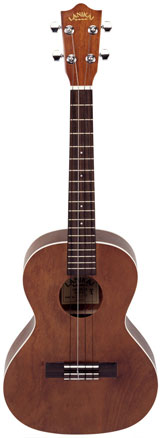
Guitar Audio and Lanikai LU-21CE Reviews

2
Lanikai-LU-21CE

I was searching for a ukulele for a few weeks and I finally found a website that sold the one that was on my Christmas wish list. The site is called Guitar Audio (http://guitaraudio.com). Don’t be fooled by the name. I was confused at first, I thought they only sell guitars but I found out that they sell the things you’ll need as a professional musician.

I was looking to buy a Lanikai LU-21C Ukulele. Guitar Audio’s site popped up on Google shopper as one of the cheapest places to buy. I had to take advantage. One of the first things I liked was the fact that they take PayPal as a payment. The second thing was that their website is laid out neatly and I could find the ukulele really quickly. The third is their free shipping button. I really had to take advantage of the great deals.

It’s been a while since I ordered stuff from the internet. I’d say a good 2-3 years and this is a musical instrument. Buying an instrument online violates my internal dialog where you need to listen to the instrument before buying it.  Also, I was a little hesitant especially since I was getting the ukulele at a really great price ($121.95). Other sites list this ukulele at $139, $159, and $195. I put my order in on Tuesday, used the free shipping option, and received the ukulele on Monday. They shipped it on Wednesday (I ordered it really late on Tuesday).

I was tracking the package the whole time. The tracking slip said it was 10 pounds. I was a little confused. How does a 3 pound ukulele weight 10 pounds. The answer? Really good packing. The people at Guitar Audio really know how to pack instruments. The whole time I thought the ukulele was just going to ship in a small box. Nope, Guitar Audio took time in packing my precious ukulele in several layers of padding before shipping it out.

I’m definitely going to use Guitar Audio again in the future!


The Lanikai LU-21CE is a beautiful ukulele. I’ve had it for a couple days now and I’m blown by the sound quality coming out of this tiny box.

Here are some technical specifications:

MODEL: LU-21CE
SCALE LENGTH: 15in.
WIDTH AT NUT: 1.375in.
TOP: Nato
BACK/SIDES: Nato
FRETBOARD: Rosewood
FRETS: 18
MACHINES: Chrome Die-Cast
BINDING: White

The E in LU-21CE means it’s an acoustic/electric ukulele. The non-electric is LU-21C. The C means it’s a concert size ukulele. There are different sizes of ukuleles (soprano, concert, tenor, baritone). Put it all together, it’s a concert sized acoustic/electric ukulele. In this case, the preamp is a Belcat UK-2000. I’ve read other sites that say their LU-21CE came with a Shadow preamp. This preamp, according to their site, uses a UK-4000 for the pickup. The UK-4000 is a piezo style pickup (sits under the bridge). From the Belcat website, it looks like this combo is the best that they sell.

The ukulele comes with Aquila strings which are already prestrung. This model uses Nato for most of the body parts. For the most part it sounds really great and I can definitely hash out a song without confusion. The sound quality isn’t as great as it’s spruce or mahogany counterparts. This ukulele is made from Nato wood. To me, the Nato wood seems very light and not as sturdy as maple, spruce, or mahogany. I’m going to admit that this is my first Nato based instrument. Overall, it’s a great play if you are starting out like me.

The electric part of this ukulele was a little disappointing. I was expecting a nice chorus, tremolo, sustain sound coming from any ukulele that has a preamp and a piezo pickup. I was wrong. The sound came out raw. Almost as if all we did was place a microphone inside the body. I guess this is what’s supposed to happen but then it got me thinking that if that’s the original sound, then the whole ukulele is off. Sure I can adjust the bass and treble from the preamp but it didn’t change the fact that I really felt like it was pumping out a raw sound.

I’m going to have to try it out with some of my BOSS pedals. For amplification, the electronics do a great up in amplifying the sound. I guess I just need a better way of managing the output.

Out of 10, I’d probably give this ukulele a 7. The price is perfect and I wasn’t able to find another ukulele in the same range that was an acoustic/electric. Like all my other instruments, I buy low when first starting then upgrade as I get better. I’m sure you follow the same philosophy.

Enjoy!

References:
Guitar Audio
Lanikai Ukuleles

Super Mario Bros Wii – Mushroom Houses

37


I was wondering how to get all the matches in on the mushroom houses in Super Mario Bros Wii. Sure enough there are patterns and here they are.


World 1


World 2


World 3


World 4


World 5


World 6


World 7


World 8


Arthemia Theme and WordPress 2.9.2 – OK

2

Took the gamble and upgraded to WP 2.9.2. The Arthemia theme is working. So far so good.

Marines in Tinian, Not Guam?

2

I’m sorry but I really don’t see why Guam can’t take the Marines. The base is big and I really think this will boost Guam’s economy.

Check out this article:

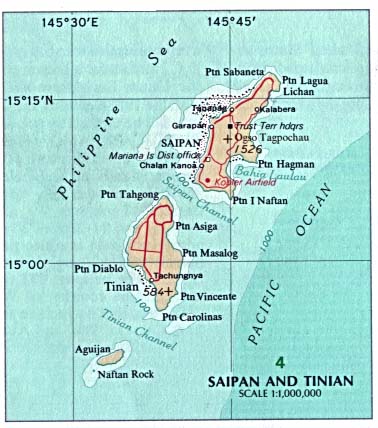
TOKYO — Attention, Marines: If you need a new home for those helicopters on Okinawa, give Tinian a call. The tiny mid-Pacific island is waiting to hear from you.

That’s the message from leaders on the Commonwealth of the Northern Marianas Islands, according to a spokesman for Gov. Benigno R. Fitial.

“We would be willing to consider any relocation the government would present to us,” said spokesman Tom Linden, who serves as coordinator of the commonwealth’s Military Integration Management Committee.

When asked Thursday if that could include permanently playing host to as many as 4,000 Marines and helicopters comprising air operations at Marine Corps Air Station Futenma — the focus of a U.S.-Japan stalemate involving relocation of the base on Okinawa — Linden said it depends on what Pentagon leaders ultimately want.

“If they wish, I guess it would,” he said during a phone interview.

It was not known what the military thought of the idea. A phone call to the Joint Guam Program Office, the military office on Guam charged with coordinating the buildup, was not returned Thursday.

Japanese officials on a committee to look at alternatives to hosting Marine air operations on Okinawa met this week with Guam officials and Fitial to discussed options there and on Tinian and other islands in the commonwealth. Under a 2006 U.S.-Japan military realignment pact, Japan is to pay nearly 60 percent of the projected $10.6 billion cost of relocating Marines from Okinawa to Guam.

Tinian’s interest in hosting U.S. military troops is a far cry from growing concerns on Okinawa and Guam, where the issues include, respectively, the continued presence and the impending arrival of thousands of Marines.

“We would like to see some military buildup in the area,” Linden said this week. “Tinian has been waiting for 30 years. They have been expecting to have a military buildup for quite some time.”

The Manhattan-size island, a major launching point for B-29 bombing missions of Japan during World War II, lies about 80 miles north of Guam.

So far, the military wants to use Tinian as a training area for the 8,600 troops from III Marine Expeditionary Force who are expected to move from Okinawa to Guam by 2014.

That training would require four small-arms ranges and a 1,000-square-meter area to allow platoons to conduct maneuvering exercises, according to John Jackson, a retired Marine Corps colonel who is director for the Guam program office. As many as 300 Marines would come monthly for week-long training. They would bring their own supplies, set up their own tents and stay on their own land.

Some in the commonwealth, which consists of 15 islands including Saipan and Rota, say current military plans for Tinian aren’t mutually beneficial. Specifically, they say the Marines’ training proposal may not mitigate for what the local economy could lose — access to chili pepper crops, grazing lands and tourist attractions like the runway the B-29 “Enola Gay” used as it took off to drop an atomic bomb on Hiroshima, according to Phillip Mendiola-Long, the current president of Tinian’s chamber of commerce.

“The chamber supports the buildup,” Mendiola-Long said during a phone call earlier this week. “But we have to have an equal partner. We’re going to start to slide.”

Yet it’s unclear, at this point, whether the Marines would be allowed any liberty time to spend money on the island. That’s what has some worried and looking for more military investment.

For more than three decades the military has leased nearly 28 square miles on Tinian, an area that covers two-thirds of an island that has fewer than 3,000 residents and no stop light. Past military training there was infrequent but significant, local and military officials said. Every two to three years, a few hundred troops would drop in for two to three weeks to train and spend money.

“The local hotels would fill,” Mendiola-Long said. “We’d run out of money in the ATMs.”

Vendors would sell food, and troops on liberty would gamble in the island’s sole casino, he added.

Between training sessions, the military land remained open to the public.

When the military announced nearly four years ago it would use Tinian for more frequent training, commonwealth leaders grew interested, Mendiola-Long said. But they found out late last year that the military plans for Tinian involve only expeditionary training.

The Marines “must be able to defend, deter, meet treaty obligations or any other contingency,” said Col. Robert Loynd, one of two Marines on Guam who currently make up Marine Forces Pacific (Forward) Guam, the unit proposed to grow to 8,600 Marines.

That could mean tourist areas could be closed for portions of the training, according to Jackson. It would periodically cut access to the island’s main north-south road, he added. And, while military construction might add a couple hundred temporary jobs to the island, overall the military estimates it will need 12 to 15 full-time jobs to work security, clean out temporary toilets and cut back brush.

“We’re going to cut the grass and clean up the poo-poo?” said Mendiola-Long, with a hint of indignation.

Linden says Fitial is working with Guam leaders to find ways the proposed buildup could benefit Tinian more. The Futenma offer is part of those plans.

“The feeling is that Guam is getting all the money with very little lost,” Linden said. “On Tinian, the military is going to use more land, with next to no economic impact.”

References:
http://www.stripes.com/article.asp?section=104&article=67975

World Park: Micronesia?

2
Courtsey of Alan Chan

I saw this really cool proposal to turn the Federated States of Micronesia (F.S.M.) into a World Park sort of a national preserve. That makes so much sense for a country that wants to preserve its culture and land.

Here’s the article by Justin Nobel from TIME.com:

Imagine a protected park half the size of the continental U.S., covering a sea-life-loaded swath of the Pacific Ocean and the 607 tropical islands therein. The park’s inhabitants live mostly in traditional villages and still remember how to do things much of the world has forgotten, such as make clothes from scratch and live off the land. This park would, in fact, encompass an entire country — the Federated States of Micronesia (F.S.M.) — and if the archipelago nation pulls it off, it will be the first of its kind in the world. “It’s a visionary, radical concept,” says Howard Rice, an instructor at the College of Micronesia who came up with the idea. “There’s never been a world park. It doesn’t exist in the dictionary. It doesn’t exist anywhere.”

If successful, Micronesia will be the first nation to become a wholly protected area, adhering to development and conservation standards designed to safeguard the country’s unique culture and rich marine biodiversity and kick-start its placid economy. According to Rice, who once operated an eco-tourism company in the Caribbean, developing high-end eco-tourism is the answer to F.S.M.’s perennial job shortage. Michigan State University (MSU) has already agreed to provide technical expertise for the park, and the National Geographic Society has also issued the project its stamp of approval. This spring, Pohnpei, one of F.S.M.’s four states, will host an economic summit to address the park’s planning.

References:
http://www.time.com/time/world/article/0,8599,1959020,00.html

Senator Jim Webb to Visit Guam

0

RICHMOND, VA. — U.S. Sen. Jim Webb plans to visit Japan, Okinawa and Guam next week.

Webb chairs the Senate Committee on Armed Services Personnel Subcommittee and the Committee on Foreign Relations East Asian and Pacific Affairs Subcommittee.

Webb said Tuesday it will be his first trip to Japan since the change in government last year.

More Cakes – Eric Carle Cake

2

I made a cake for my sons’ school the other day. The cake is based from Eric Carle’s book, “The Very Hungry Caterpillar.”

I was thinking about doing the butterfly but it didn’t work out.

Here I cut sheet cake into circles. The body is made of half circles. The face is the only complete circle. The antenna are Pocky sticks.

The feet are made from fondant.

8-bit Mario Cake

0

I was commissioned to make a cake that resembled 8-bit Mario. Maybe I should say someone ordered a cake from me but I like commissioned because I pretend that my cakes are more of a work of art than food.

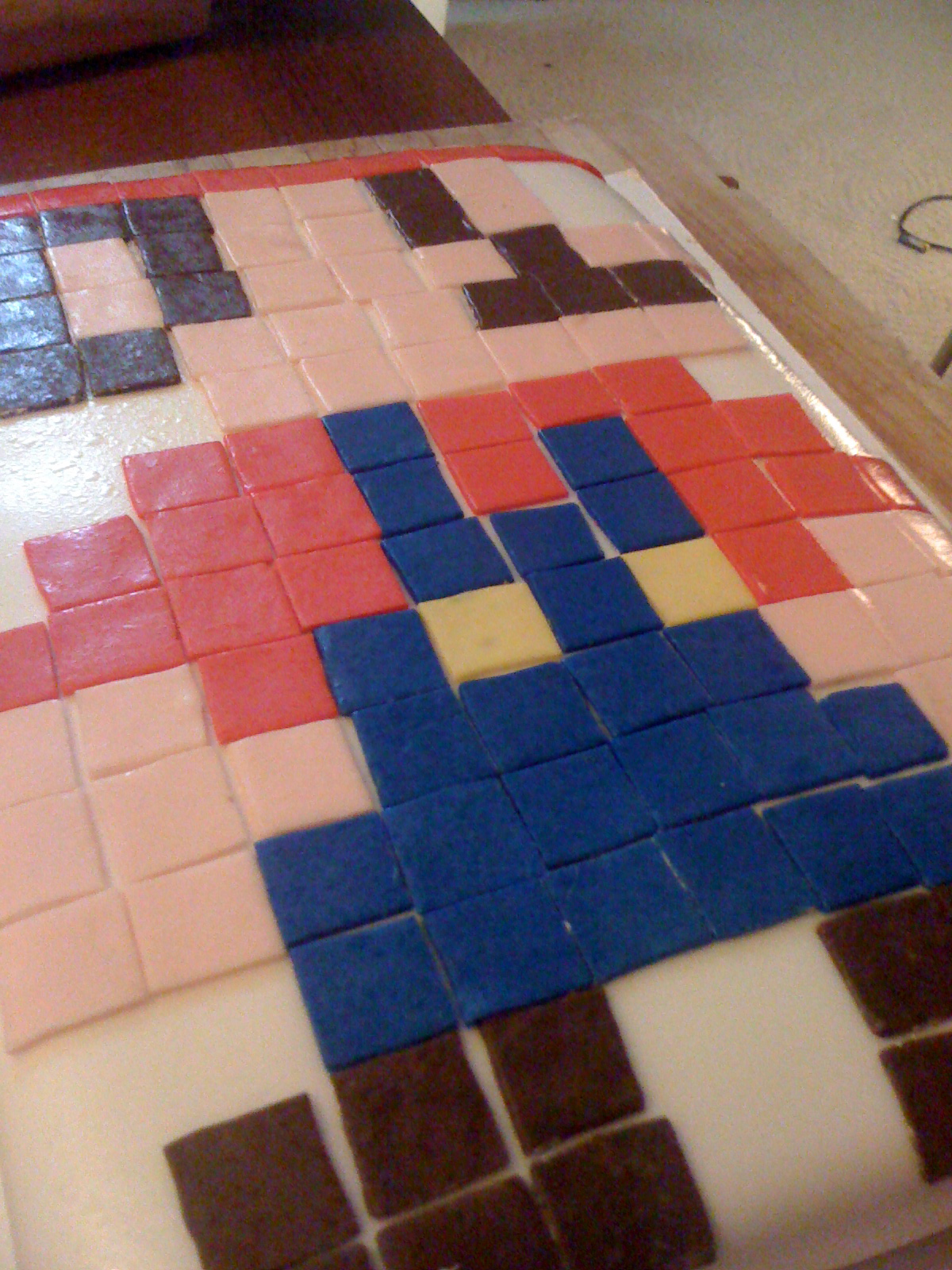
This cake was very challenging and fun to make at the same time. I built my diagram in MS Excel (pictured on the left). The diagram gave me a bigger picture of how many pieces I needed of each color. My first concept design was to cut out 2 inch squares but then after drawing it out it would have been a 2 by 3 foot cake. My second concept was to shape the cake before decorating. This didn’t work out well because of the small corners.

After baking and icing the cake part, I covered it in white fondant. Then I began cutting out my squares and placing them on the cake.

After cleaning up, I found some extra fondant and decided to throw in some extras. Here are the extras:

1-Up and Grow Mushroom are made completely out of fondant. The cake and the mushrooms were a hit at the party. I’m not sure if I’ll ever make one like this again, but I am inspired to make the 8-bit title screen.

Here’s my recipe for chocolate cake, by Hershey’s

Hershey’s “Perfectly Chocolate” Chocolate Cake

Ingredients

  • 2 cups sugar
  • 1-3/4 cups all-purpose flour
  • 3/4 cup HERSHEY’S Cocoa
  • 1-1/2 teaspoons baking powder
  • 1-1/2 teaspoons baking soda
  • 1 teaspoon salt
  • 2 eggs
  • 1 cup milk
  • 1/2 cup vegetable oil
  • 2 teaspoons vanilla extract
  • 1 cup boiling water

Directions

1. Heat oven to 350°F. Grease and flour two 9-inch round baking pans.

2. Stir together sugar, flour, cocoa, baking powder, baking soda and salt in large bowl. Add eggs, milk, oil and vanilla; beat on medium speed of mixer 2 minutes. Stir in boiling water (batter will be thin). Pour batter into prepared pans.

3. Bake 30 to 35 minutes or until wooden pick inserted in center comes out clean. Cool 10 minutes; remove from pans to wire racks. Cool completely.  10 to 12 servings.

VARIATIONS:
ONE-PAN CAKE: Grease and flour 13x9x2-inch baking pan. Heat oven to 350° F. Pour batter into prepared pan. Bake 35 to 40 minutes. Cool completely. Frost.

THREE LAYER CAKE: Grease and flour three 8-inch round baking pans. Heat oven to 350°F. Pour batter into prepared pans. Bake 30 to 35 minutes. Cool 10 minutes; remove from pans to wire racks. Cool completely. Frost.

BUNDT CAKE: Grease and flour 12-cup Bundt pan. Heat oven to 350°F. Pour batter into prepared pan. Bake 50 to 55 minutes. Cool 15 minutes; remove from pan to wire rack. Cool completely. Frost.

CUPCAKES: Line muffin cups (2-1/2 inches in diameter) with paper bake cups. Heat oven to 350°F. Fill cups 2/3 full with batter. Bake 22 to 25 minutes. Cool completely. Frost. About 30 cupcakes.

Enjoy!

Guam Governor Visits USS Ohio

0

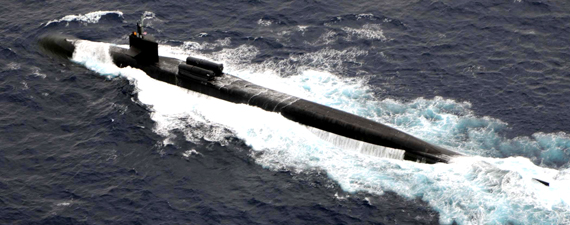
USS OHIO, Guam (NNS) – The guided-missile submarine USS Ohio (SSGN-726) was host to the Governor of Guam, the Honorable Felix P. Camacho, on U.S. Naval Base Guam Jan. 21.

The governor was treated to a luncheon in the wardroom where he was introduced to the crew’s officers and learned about the platform and capabilities of the Ohio-class submarine.

“The purpose of the visit was to inform Governor Camacho of the unique capabilities of our submarine,” said Capt. Murray Gero, commanding officer of USS Ohio. “We also wanted to express our gratitude for the opportunity to stop in Guam for scheduled maintenance and a little recreation and relaxation.”

He then toured numerous spaces topside and on board including the submarine’s unique dry deck shelter, which allows special operations forces, including Navy SEALs, to deploy undetected from deployed submarines.

“A memorable part of the tour was visiting the operations section and learning the further capabilities of this fine submarine,” Camacho said. “It is a tremendous asset to our nation.”

At the end of the hour-long tour, Gero said the tour was a success.

“The governor met the crew, and heard how they greatly appreciate the hospitality of Guam,” Gero said.

Camacho expressed his appreciation to have the opportunity to visit.

“It was an extreme privilege to come aboard,” Camacho said. “To know what this submarine does and that our island of Guam can accommodate is incredible. I really enjoyed the opportunity.”

Ohio Class submarines are equipped with superior communications capabilities and the ability to carry more than 150 Tomahawk Land Attack Missiles (TLAM) or support Special Operations Forces for extended periods. The versatility of the SSGN is one of its greatest strengths.

References:
http://www.c7f.navy.mil/news/2010/01-january/11.htm

Guam Dubbed Backwateria

Hawaii’s State Laboratory to Help Guam

7

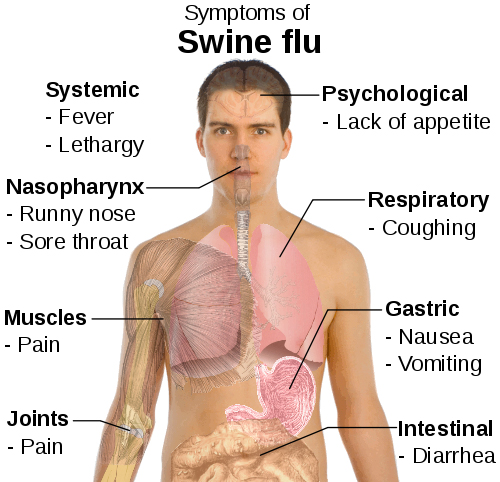
More timely testing and reporting of swine flu and other infectious diseases in the U.S. Affiliated Pacific Islands is expected with help from Hawaii’s state laboratory.

The affiliated islands include Guam, the Commonwealth of the Northern Mariana Islands, American Samoa, the Federated States of Micronesia, the Republic of Marshall Islands and the Republic of Palau.

The Department of Health is collaborating with the Pacific Island Health Officers Association and Association of Public Health Laboratories to provide influenza testing for all 10 laboratories in that region. The U.S. Centers for Disease Control and Prevention provided $471,000 for the testing.

Bill Gallo, CDC senior management official for Hawaii and the Affiliated Pacific Islands, said transportation problems and lack of laboratory capacity result in “less than ideal ability” to provide an early warning system and response to emerging infectious diseases in the Pacific region.

CDC officials generally are assigned only to big states, but Gallo was assigned here because the CDC recognizes the significance of the Pacific region “as a potential pathway for emerging viruses” to Hawaii and the mainland, he said.

Along with treating the local victims of the latest H1N1 outbreak, Hawaii’s top laboratories prepare for what’s next.

Officials discussed the Hawaii-Pacific Islands partnership yesterday during a media tour of the state laboratory on Waimano Home Road in Pearl City and in earlier interviews.

The state Laboratories Division had the training, equipment and military and private partnerships when H1N1 hit the state last May because of “good planning and preparations” for a potential H5 (avian flu) epidemic, said Dr. Chris Whelen, division administrator.

It is the only public health laboratory certified by the National Animal Health Laboratory Network to test birds for West Nile virus or avian flu, which exists in Egypt and China and remains a threat, he said.

The laboratory normally receives about 2,000 specimens a year for testing, he said. Since May it has received 26,000 specimens just for influenza—a 250 percent increase from the previous peak.

Without cooperating private and military labs, Whelen said, “We would have been overwhelmed.”

Gallo said his focus is on the six U.S.-affiliated areas, but he has visited groups that work in all 22 Pacific jurisdictions, talking about how to develop more disease detection networks, improve communications and build capacity in the islands. “Swine flu helped bring a lot of this to light.”

The Hawaii laboratory began testing specimens for American Samoa and the Marshall Islands at the beginning of the H1N1 outbreak because it took four flights to get them to a testing facility in Melbourne, Australia, Whelen said.

“It was almost a humanitarian decision even though we didn’t have funding,” he said.

He said the partnership with the Hawaii laboratory for swine flu testing is part of a five-year plan to develop laboratory capacity on Guam and training for health professionals in the Pacific Islands. “It is a tremendous challenge.”

References:
http://www.starbulletin.com/news/20100122_Pacific_flu_testing_in_state_labs_hands.html