


Wednesday, February 4, 2026
spot_img
Home Blog Page 223

Navy Awards $14M to Core Tech International Corporation in Guam

0

The Navy has awarded a contract worth nearly $14 million to a company to upgrade the wastewater collection system at Naval Base Guam.

The Naval Facilities Engineer Command Pacific at Pearl Harbor said Tuesday that antiquated sewage lift stations at the Apra Harbor Wastewater Treatment Plant will be replaced with new facilities that provide increased capacity and reliability.

In addition, pump station controls and emergency generators will be placed in structures hardened for typhoons.

The contract went to Core Tech International Corp. of Barrigada, Guam, one of six companies to submit proposals.

Core Tech International is a full service General Contractor with a proud tradition of success in providing the highest standards of planning, estimating, engineering and construction services on a variety of award winning projects.

As a fully bonded Guam-based company, Core Tech International understands just how challenging supply chain logistics and component sourcing can be in an island environment. That is why Core Tech maintains a full complement of construction support resources from construction specialists and engineers to fully stocked warehousing as well as quarry & batch plant facilities and heavy equipment to ensure that every project is delivered with quality on time and on budget.

With an uncompromised record of quality, safety and efficiency, Core Tech has established a reputation of delivering client satisfaction project after project. Core Tech International has a long list of success in military and commercial projects including civil & infrastructure works, schools, retail & industrial complexes, institutional facilities and a host of residential and specialized facilities.

References:
http://www.coretechintl.com
Guam-CNMI Ferry Service

0

ferry

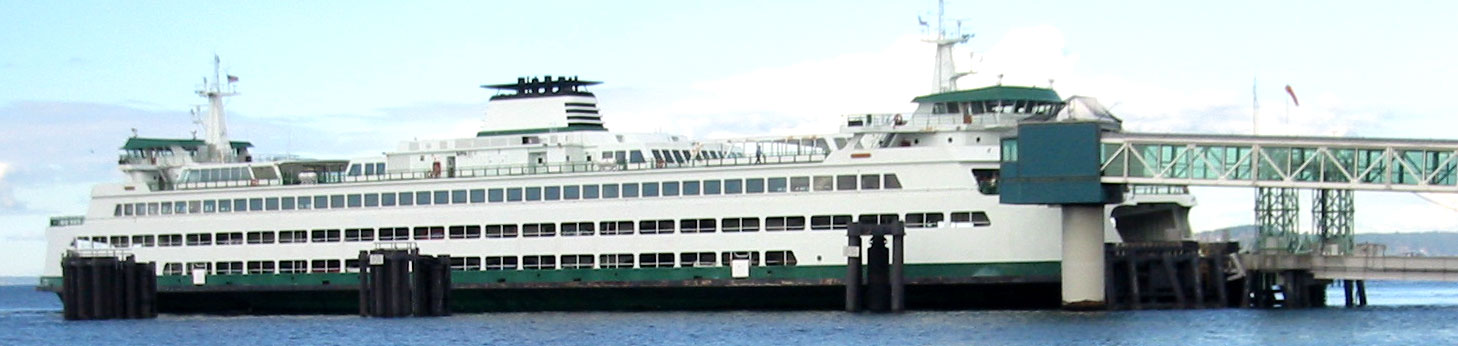
Ahh…the ferry topic again.  I’m glad someone brought it up.  While this would be great I can see the concern the feds have with it.  Also, I’d like to see if it’s possible to have a cruise type ship where we can go from island to island.  The picture above is a picture of a ferry in Washington (don’t get your hopes up just yet).

Sen. Paul A. Manglona (R-Rota) has pushed anew the idea of establishing regular ferry service between Guam and the CNMI with the impending military buildup, as well as the permanent presence of U.S. Customs and Border Patrol personnel on Rota and Tinian in light of federalization.

The senator said tying the islands’ economies through reliable ferry service could be mutually beneficial to both territories.

Manglona was among those who submitted written concerns to Delegate Gregorio Kilili C. Sablan during his first town hall meeting on Rota Thursday night.

“A feasibility study must be conducted before we can take this idea to the U.S. Congress. I will continue to work with our local leaders on gathering data for a comprehensive study and hope that you may be able to work on garnering support for this project in Congress,” Manglona told Sablan.

He also asked Sablan to work with his colleagues in the U.S. Congress to include Chinese and Russian tourists in the joint Guam-CNMI visa waiver program.

“As we continue to work in brining in charter flights from Japan and Korea to Rota, we must keep open other existing markets in Russia and China,” he said.

Economic disaster

The Rota senator said failure to permanently station U.S. immigration and Customs and Border Protection personnel on Rota and Tinian “could spell economic disaster to our island and its people.”

“Without such a presence, visitors to our islands may be unduly burdened and delayed and we run the very real risk of losing direct international flights into Rota,” he said.

The Commonwealth Ports Authority has expressed concerns over the lack of local funding for needed infrastructure but Manglona said by working with Sablan’s office and the relevant federal agencies, Rota and Tinian could see permanent presence of federal immigration and customs personnel on these islands.

Manglona also lauded Sablan for introducing H.R. 3397 or the Northern Mariana Islands College Access Act of 2009, which would grant financial assistance to CNMI high school graduates in the form of in-state tuition at any public college or university in the United States.

‘Put monument on Rota’

Manglona, in his two-page letter, asked that Rota be considered as the site for the proposed Marianas Trench Marine National Monument Visitors Center.

He said Rota has worked hard to build and brand itself as an eco-tourism destination and it would therefore fitting to put the visitor center on the island.

Manglona said Rota’s proximity to Guam would also allow Guam residents and visitors quick and easy access to the center.

“Moreover, the U.S. Fish and Wildlife Service is presently working on a Habitat Conservation Plan to address the needs of the many endangered species on Rota. Perhaps, a Marine National Monument Visitor Center on Rota could help mitigate the impact the Conservation Plan will have on our island,” Manglona added.

By Haidee V. Eugenio

References:
http://www.saipantribune.com/newsstory.aspx?newsID=92878&cat=1

LBA Technology Supplies Antenna Solution for US Navy Guam NAVTEX System

0

SAMWAS-200_ATUShips sailing in waters near Guam have a new connection to shore. The island’s NAVTEX coastal telex broadcast system has been upgraded by replacing three conventional 300’ vertical towers with one small aperture SAMWAS antenna

The unique SAMWAS medium wave antenna system is a product of LBA Technology, a North Carolina telecommunications firm with over 40 years experience in antenna innovations. The company’s engineered solution for the Guam site is replicable at most other NAVTEX locations worldwide.

he coastal telex broadcast system called NAVTEX is a vital link for commercial and military ships operating within 400 miles of a coastline. NAVTEX is a maritime safety system typically operated by navies, coast guards, or lighthouse authorities in coordination with the International Maritime Organization (IMO). The shore-to-ship signals are sent out at either 518 kHz or 490 kHz.

For the US Navy transmission site on Guam, LBA Technology used a suite of subsystems called SAMWAS-200 that incorporates a grounded 199 foot electrically short transmission antenna rated at 2500 watts. Installed for LBA in the spring of 2009 by Guam contractor AIC International Construction, the antenna’s propagation of medium wave signals has proven effective and efficient, though its physical footprint is much smaller than the three-tower system it replaced.

The short height avoided the need for aviation safety lights and the associated installation and operating costs. The grounded tower reduces system vulnerability to lightning and reduces RF safety hazards.

The transmitter building is located fully 3,000 feet from the tower. As the dual frequency SAMWAS-200 Phantom-E™ remote control system can use a coaxial cable as its sole connection for both RF and control signals, an existing coaxial cable was utilized with no new trenching for electrical services. The Phantom-E™ system selects between 490 and 518 kHz frequency modes.

As there are no moving RF parts in the SAMWAS tuning unit, it is expected to function reliably for years with minimal maintenance. Because of the stability of the overall system, periodic retuning is not needed to accommodate changing environmental conditions.

Other SAMWAS antenna systems from 65 to 350 feet high are available to support DGPS, NAVTEX, and GMDSS medium wave transmissions. Dual NAVTEX frequency support and DGPS diplexing are options. Full turnkey projects with transmitters and message equipment are offered.

For tactical communication situations, LBA Technology offers medium wave transmission systems integrated into trucks or trailers, and smaller emergency units that can be assembled on site by hand.

References:
http://antennablog.lbagroup.com

Obama Administration Delivers More than $101 Million for Weatherization Programs in Guam and Pennsylvania

0

DepartmentOfEnergy

Recovery Act funding to expand weatherization assistance programs, create jobs and weatherize approximately 29,200 homes

WASHINGTON, DC – U.S. Department of Energy Secretary Steven Chu today announced that the Department of Energy is providing more than $101 million in funding from the American Recovery and Reinvestment Act to expand weatherization assistance programs in Guam and Pennsylvania. The funding, along with additional funds to be disbursed after the grantees meet certain Recovery Act milestones, will help them weatherize approximately 29,200 homes, lowering energy costs for low-income families that need it, reducing pollution, and creating green jobs across the country.

“These awards demonstrate the Obama Administration’s strong commitment to moving quickly as part of the country’s economic recovery — creating jobs and doing important work for the American people — while ensuring that taxpayer dollars are spent responsibly,” said Secretary Chu.  “Today’s investments will save money for hard working families, reduce pollution, strengthen local economies, and help move America toward a clean energy future.”

The Department of Energy also released a video today showing Secretary Steven Chu visiting a Columbus, OH home as it is being weatherized.  He is joined in the video by Ohio Governor Ted Strickland and Columbus Mayor Michael Coleman, where they discuss the benefits of weatherization and how funding from the Recovery Act is having a direct impact in communities across America.  View the Home Weatherization Visit video.

Pennsylvania and Guam will receive 40 percent of their total weatherization funding authorized under the Recovery Act today, adding to the initial 10 percent of each funding allocation that was previously awarded for training and ramp-up activities.  The remaining 50 percent of funds will be released after they meet specific reporting, oversight and accountability milestones required by the Recovery Act.  The states may spend up to 20 percent of their total funds to hire and train workers.

DOE’s Weatherization Assistance Program will be available to families making up to 200 percent of the federal poverty level – or about $44,000 a year for a family of four.  Weatherization projects allow low-income families to save money by making their homes more energy efficient, which results in average savings of 32 percent for heating bills and savings of hundreds of dollars per year on overall energy bills.  States will spend an average of $6,500 to weatherize each home.

The Recovery Act includes a strong commitment to oversight and accountability, while emphasizing the need to quickly deliver funding to states to help create new jobs and stimulate local economies.

The following states and territories received weatherization funding today:

GUAM – $447,419 awarded today

Guam will use its Recovery Act funds to weatherize approximately 200 homes over the next three years. The territory’s Weatherization Assistance Program will be administered by the Guam Energy Office, under the Guam Environmental Protection Agency.  Since 2009 is the first year Guam is working with the weatherization program, the Energy Office will expand its staff, hiring experienced training professionals and weatherization workers.  The program will combine rigorous field monitoring with an extensive training and technical assistance program for contractors, auditors, administrative personnel, and staff at the Energy Office and local organizations.  Together, these measures will help ensure quality weatherization services and the success of the program across the territory.

After demonstrating successful implementation of its plan, Guam will receive nearly $560,000 in additional funding, for a total of more than $1 million.

PENNSYLVANIA – $101,117,225 awarded today
Pennsylvania will use its Recovery Act WAP funds to weatherize or re-weatherize more than 29,000 homes over the next three years.  These resources will enable the state to achieve greater energy independence, increase demand for skilled weatherization professionals, and help low-income residents reduce their energy bills.

The Pennsylvania Weatherization Assistance Program is administered through the Department of Community and Economic Development (DCED), which works with forty-three proven local agencies to deliver services.  Pennsylvania has a comprehensive plan for increasing weatherization activity while improving the program’s overall energy reduction performance for the low-income residents it serves. To ensure accountability, monitoring and reporting as part of its weatherization plan, DCED will add new oversight staff with expertise in areas such as financial management and technical assistance.

After demonstrating successful implementation of its plan, the state will receive an additional $126 million, for a total of nearly $253 million.

References:
http://www.energy.gov/news2009/7835.htm

Website Link Checker

0

w3cOne of my coworkers suggested using this site to check for bad links in a webpage.  I tested it out on mine and I was surprised at no errors.  At the same time I was surprised that this site came up with 325 links using the default settings (not specifying how many pages to go down).  I guess 325 isn’t bad.  Maybe it’s been a while since I’ve made a website with more than 5 pages and only a few links.  For the 325 pages on this site (as of 8/14/2009) it took about 3 minutes.

There are some software programs out there that can do the same thing.  You might have to pay for them.

References:
http://validator.w3.org/checklink

Pulled Pork Recipe/Slow Cooked Pork Recipe

1

As I write this, I’m contemplating posting this as part of my 100 portion category (posts that only contain recipes for 100 portions).  I recently sold some slow cooked pork…pulled pork…BBQ pork sandwich stuff at a bazaar/craft fair/party.  I wasn’t sure what to call this recipe since there are a couple of people out there who look at what I served and said, “Pulled Pork?” or “Slow Cooked Pork?”

Either way, it’s another one of those recipes that I pulled from a combination of recipes I’ve found out there on the internet.

Pulled PorkHere’s the recipe I used:

Pork Ingredients
30 pounds of pork shoulder
10 tablespoons each of sea salt, black pepper, chili pepper, red pepper, oregano, dehydrated onion, garlic, and sugar (we’re going to use some of this in the sauce) – dry rub.

Pork Method
Place pork in roasting pan.  Heavily coat pork with the spices.
Cook at 250° for 12 hours in the oven.

BBQ Pork SauceSauce Ingredients
2 quarts vinegar
4 quarts water
3 cups tomato paste
1.5 cups mustard
Whatever you have left over from the dry rub
4 cups of sugar
3 teaspoons celery seeds
6 tablespoons chili powder
1 onion (juiced)
1 garlic bulb (juiced)
Oh, I threw in some truffle oil

Sauce Method
Combine all ingredients and cook over medium low heat for 40 minutes and well blended.  Also, the longer the better.  I cooked mine over low heat for 3-4 hours.

Pork Plate SignThis experience was to test out the possibility of me getting into the food service industry.  What’s scary is that everything worked out.

Jobs Plan Called a Threat to Marines’ Guam Move

0

Ray MabusSecretary of the Navy Ray Mabus, in Hawai’i on his first Pacific tour, yesterday said a jobs requirement added to a defense bill by U.S. Rep. Neil Abercrombie would jeopardize the planned $15 billion move of 8,000 Marines and their families from Japan to Guam.

“It’s no secret that we oppose his (Abercrombie’s) amendment to do that,” Mabus said. “For one thing, we don’t think we can afford to make the move if that happens.”

Abercrombie yesterday said defense authorization bills passed by the U.S. Senate and House are in conference committee “and we’re talking over what some of the (jobs amendment’s) implications are.”

The Hawai’i Democrat said the Obama administration is “open to discussion” over the amendment.

“So I have a lot of confidence that our point of view is going to get a fair hearing,” Abercrombie said. “Now, whether we prevail, or prevail exactly the way I’d like to prevail, I don’t know.”

Abercrombie’s amendment to the House version of the 2010 National Defense Authorization Act requires that 70 percent of jobs for the Guam buildup go to Americans and that wages be set at levels for similar projects in Hawai’i.

A Congressional Budget Office report estimated the measure would double the $10 billion construction cost for the move by 8,000 Marines and 9,000 family members from Okinawa to Guam, where labor costs are much lower than in Hawai’i.

Madeleine Bordallo, Guam’s delegate to the House of Representatives, previously predicted Abercrombie’s measure would be heavily altered or omitted.

Mabus, a Democrat and former Mississippi governor, is the 75th secretary of the Navy. He took over the job in May. As secretary of the Navy and Marine Corps, he is responsible for an annual budget of more than $150 billion and 900,000 people.

Mabus said the February grounding of the cruiser Port Royal is a concern.

“Anytime you’ve got a ship that runs aground it raises concern,” Mabus said. “But we’ve taken a good look at what caused that. I think we understand it and I don’t think it speaks of a big training and readiness concern across the Navy.”

Mabus recently traveled to Iraq and Afghanistan, and he said 12,000 to 14,000 sailors operate on the ground in the region — more than the 9,500 at sea. He said he visited a Provincial Reconstruction Team in eastern Afghanistan headed up by a Navy submariner.

By William Cole

References:
http://www.honoluluadvertiser.com/article/20090821/NEWS08/908210332/Jobs+plan+called+a+threat+to+Marines++Guam+move

Air Force Team Integrates Tsunami Lessons

0

Tsunami Hazard ZoneWhen a massive earthquake jolted the floor of the Indian Ocean in late 2004, the U.S. military, along with much of the world, rushed to help.

But in those first few days, that response to the massive devastation from the quake-triggered tsunami was stymied by military medical units too big to move quickly, Air Force officials now say.

“We couldn’t get out the door small enough and fast enough to make a difference,” said Air Force Col. Wayne Pritt, the command surgeon of the 13th Air Force at Hickam Air Force Base, Hawaii.

Even with improvements made in the years following the tsunami, it still was taking at least seven C-17 cargo planes as much as a week to get the Air Force’s primary medical response team — with its 900 members — off the ground, Pritt and others said.

This summer, however, the Air Force tested a new concept that puts two planes with more than two dozen medical staff in the air within 24 hours, according to Pritt.

It also includes support staff so the team has everything needed to set up an airfield, secure an area, build a medical clinic and begin treating patients — all within six hours of landing, Pritt said.

The Air Force spent $1.2 million on medical equipment and training to set up HARRT, the Humanitarian Assistance Rapid Response Team, at Andersen Air Force Base on Guam, Pritt said.

Most of the team’s 54 members come from a combination of Andersen’s 36th Medical Group and 36th Contingency Response Group. The latter unit is comprised of airmen who build and secure an airstrip. Eleven members come from the 374th Medical Group at Yokota Air Base, Japan.

There was discussion earlier this month about whether to send the team to Taiwan after Typhoon Morakot hit. The military responds to humanitarian disasters only at the request of the U.S. State Department, which negotiates directly with the affected countries to find out what aid is wanted. In the end, PACOM officials sent Marines to help instead, Pritt said by e-mail this week.

The team can see 250 to 350 patients a day for five days before needing more supplies and replacement staff, according to Maj. Angela Thompson, a medical readiness planner with Pritt’s office. The team is set to provide general care, but it can be augmented to specialize in pediatrics, surgery or obstetrics as needed, Pritt said.

The unit is meant to supplement rather than supplant other countries’ medical systems, another lesson learned from past responses, Pritt said. In other crises, he said, the rush to help has sometimes “overwhelmed and undermined the local health care system.”

Last month, the team tested the concept on Guam, from where it would deploy in a real crisis. While Andersen has no cargo planes of its own, Pritt said that’s not a problem. In a disaster, the planes could come from anywhere in the Pacific or even from bases in the States, he said.

Early next month, the unit will test a real-time deployment on Chuuk, an island in the Federated States of Micronesia. Instead of providing triage care, the team will deploy from Guam and provide basic health care for three days, Thompson said.

Pritt and others hope the team is replicated at other Air Force commands in the world. For now, Pritt said, the team is ready to deploy.

“We’re in the Pacific,” he said. “We have earthquakes, tsunamis. It’s not if. It’s when.”

By Teri Weaver, Stars and Stripes

References:
http://www.stripes.com/article.asp?section=104&article=64265

Navy and University of Guam Partner to Conserve Fandang Tree

0
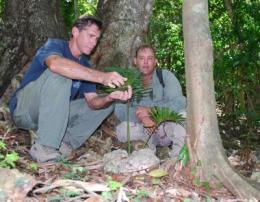
UOG Professor Thomas Marler (left) and Navy Natural Resources Specialist Paul Wenninger inspect a healthy fadang plant growing safely in the Navy's conservation planting in Tinian.
UOG Professor Thomas Marler (left) and Navy Natural Resources Specialist Paul Wenninger inspect a healthy fadang plant growing safely in the Navy’s conservation planting in Tinian.

The University of Guam has completed the establishment of a conservation planting of Guam’s endangered fadang tree on the island of Tinian. Guam Navy has funded the entire project and provided access to their lands in northern Tinian for implementing this important effort to help stave off the ongoing threats to survival of the species.

“The Navy has demonstrated exemplary commitment to the conservation of Guam’s resources by funding this project,” said UOG professor Thomas Marler. Dr. Marler has administered the project and is managing the conservation planting. “The novel idea was initiated several years ago, long before we knew for sure that the death rate among Guam’s fadang population would be so extreme,” said Marler.

The fadang tree is called ‘Cycas micronesica’ by scientists, and belongs to a unique group of plants called cycads. It has grown for thousands of years in the forests on Guam and Rota with no real threats. But two exotic insect species have recently invaded Guam and Rota, and their voracious appetite for fadang trees has pushed the tree into the endangered status.

“We felt that the remote locations on Tinian were ideal for establishing a safe haven for Guam’s fadang plants,” said Navy Natural Resources Program Manager Anne Brooke. Dr. Brooke was responsible for coming up with the initial idea and successfully establishing the project. The premise behind this sort of conservation effort is that the threats within the natural range of the endangered species are absent from the new location. This new safe zone then becomes a repository for the species even if the entire population is killed within its natural range.

“This project is a great example of a highly coordinated effort to conserve a valuable natural resource,” said Marler. “It combined the contributions of UOG, the U.S. Navy, the CNMI government, and a private landowner.” According to Marler, the CNMI Department of Lands and Natural Resources contributed extensively by fast-tracking the permitting process and providing materials and space for many of the activities, and the Fleming family in Tinian donated space for growing the fadang plants until they were ready for planting.

Fadang is the only plant of its kind in the Mariana Islands, and this extensive planting in Tinian has become a crucial component of the ongoing conservation efforts to save the species.

References:
http://www.physorg.com/news169811276.html

Russia, China Excluded from Guam Visa Program

0

Passports

Chinese and Russian tourists are being excluded from a visa waiver program being instituted by the U.S. Department of Homeland Security in the Western Pacific.

The program covering the U.S. territory of Guam and the U.S. Commonwealth of the Northern Mariana Islands is to go into effect Nov. 28.

The Homeland Security regulation covering the program said China and Russia are being excluded “due to political, security, and law enforcement concerns.”

Under the program, citizens of Australia, Brunei, Hong Kong, Japan, Malaysia, Nauru, New Zealand, Papua New Guinea, South Korea, Singapore, Taiwan, and the United Kingdom can enter Guam and the Northern Marianas for 45 days visa-free.

Citizens of other countries must obtain a visa from a U.S. embassy or consulate.

I’m not sure how I’d feel if I was excluded from visiting a place. Now that I think about it, I probably am excluded from visiting certain countries. Do China and Russia exclude people from Guam?

It’s possible, I should look it up.


References
:
http://www.honoluluadvertiser.com/article/20090818/BREAKING01/90818008/Russia++China+excluded+from+Guam+visa+program

http://travel.state.gov/