Tuesday, February 3, 2026
spot_img
Home Blog Page 225

Proposal May Hold Up Guam Base Construction

0

Construction LaserA congressional proposal to limit the construction work by foreigners could cause delays in the military’s plans to make Guam a key hub in the Pacific, according to the Pentagon’s point man on the project.

The proposal, part of the 2010 defense budget before Congress, would limit foreigners to 30 percent of work hours on construction that would ramp up military presence on the island, including the move of 8,000 U.S. Marines from Okinawa to Guam.

The idea would also require all contract winners to solicit American workers for the project, which under the current proposals could bring more than $1 billion in construction to the island by late next year.

But the challenges of improving and building up bases to accommodate the overall expansion — an increase of nearly 40,000 people on the 212-square-mile island — will likely tap out available and skilled workers on Guam, Hawaii and other U.S.-controlled areas in the region, said David Bice, executive director of the Joint Guam Program Office.

“We want U.S. workers to get the first look,” Bice, a former Marine Corps major general, said Monday during a phone interview from Guam.

But by putting a cap on those jobs, “we’re limiting the ability to get work done in a most efficient manner. It could have a potential to delay the project.”

The project has a 2014 deadline as part of an agreement between Japan and the United States to move the Marines from Okinawa. Japan is also paying for much of the move. Of the $10.3 billion estimated cost to move III Marine Expeditionary Force, Japan is to pay $6.09 billion.

So far, Japan has put $336 million toward the project, money meant to build up utilities for the Marines’ new home in Finegayan. Another $386 million in the U.S. budget would go toward improvements at Apra Harbor to allow amphibious boat landings and for changes at Andersen Air Force Base to accommodate Marine aviation equipment, he said.

The congressional budget also includes money toward a new Navy hospital, Bice said. All told, the island could see slightly more than $1 billion in construction spending next year, he said.

That spending also depends on approval of an environmental impact statement, a requirement of the National Environmental Policy Act. The statement is expected in the spring, and Bice said Monday he expects requests for proposals to go out soon after. Construction, he said, could begin on the island by late summer.

By Teri Weaver, Stars and Stripes

References:
http://www.stripes.com/article.asp?section=104&article=64115

Johnson Controls Inc. to Add Solar at Guam Navy Base

0

Johnson Controls Inc. said Monday it has signed an energy-savings performance contract with the U.S. Navy to improve the energy efficiency of the naval base in Guam.

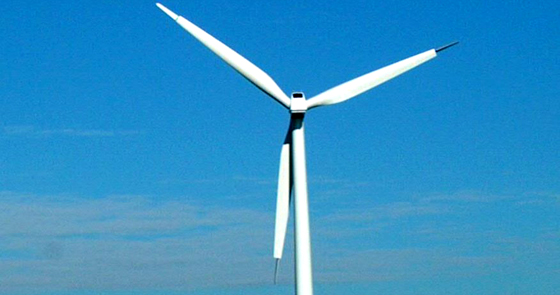
The project includes a large solar power generation system as well as energy-efficient air conditioning systems. Financial terms of the deal weren’t disclosed, but the deal is projected to reduce the base’s energy costs by $1.7 million a year.

Johnson Controls“This project is a great example of combining renewable energy technology with innovative energy conservation solutions,” said Mark Wagner, vice president of government affairs with Johnson Controls.

The project is part of meeting the Navy’s achieve a goal of obtaining 25% of its power from renewable sources by 2025, Wagner said.

Contracts with government agencies are expected to be a key source of sales for Johnson Controls thanks to energy-efficiency dollars allocated through the American Recovery and Reinvestment Act.

In the Guam project, more than 9,000 lighting fixtures and 87 air handlers will be retrofitted, and a Johnson Controls building management system will be installed to serve the base’s 49 buildings. The project is being managed by the Milwaukee-based building efficiency division of Johnson Controls. The company will be paid under a long-term contract financed through savings the Navy base will see on its energy costs.

By Thomas Content of the Journal Sentinel

References:
http://www.johnsoncontrols.com

http://www.jsonline.com/blogs/business/52888457.html

Guam Dubbed “Backwateria”

1

USS Ohio

ABOARD THE USS OHIO (AP) – Capt. Andy Hale has just worked out and is still in a sweaty T-shirt and shorts as he stands in the battle command center. He is watching a flat screen display that shows what’s happening outside on the bow and the aft.

His billion-dollar submarine – the U.S. Navy’s newest twist on underwater warfare – is hovering just below the surface off the Pacific island of Guam as a submersible disappears into the dark waters, carrying a team of commandos.

The Ohio is the first of a new class of submarine created in a conversion of 1970s vessels by trading nuclear-tipped ICBMs for conventional cruise missiles and a contingent of commandos ready to be launched onto virtually any shore through rejiggered missile tubes – against conventional forces or terrorists.

The sub’s cruise across the Pacific comes as China builds its submarine fleet into the region’s largest as part of the bulking up of its military. The voyage is the Ohio’s first deployment since the makeover, and Hale is in the odd position of showing the ship off.

It’s odd because the sub is all about stealth.

Hale can’t talk about where the ship is going. The back of the ship, where the nuclear power plant is located, is off limits. The leader of the SEAL commando contingent aboard can’t be named and the commandos themselves can’t be photographed in any way that shows their faces.

But, over the next few months, the Ohio will be making a very public statement, training intensively in some of the world’s most crowded and contested waters and joining in exercises with America’s Asian allies. Instead of hiding them, the Ohio will be showcasing its abilities to elude detection and operate too deeply and quickly to be tracked. It made its first stop last week in Busan, South Korea, for joint exercises.

Then it will likely do what it does best – vanish.

“Submarines are the original stealth platform,” Hale told The Associated Press, the only media allowed on board. “Submarine forces have always viewed the Pacific as a very important strategic area … it’s certainly grown in importance in the last 10 years.”

Just about every country with a coastline in Asia wants or has subs.

China, Japan, Australia, India, Malaysia, Pakistan, Indonesia, Singapore, Bangladesh and South and North Korea either now have or are planning to acquire them.

Most don’t pose much of a threat to the more advanced American fleet. But that is changing.

While Russia continues to be a factor, China now has the biggest submarine fleet in the region, with nearly 60. The U.S. has upped its presence in the Pacific, and now has more ships – and more subs – in this part of the world than in the Atlantic.

But they are still outnumbered.

“There are many challenges in the Pacific,” Hale said. “China is certainly one of them, but it is not the only one.”

China’s subs are mainly diesel-powered, meaning they must come up for air more frequently than U.S. nuclear-powered vessels, and their crews are not believed to be as well trained as American submariners, who spend several months at a time at sea.

China’s fleet is also highly focused on patrolling its own coastal waters and on dealing with potential hostilities over Taiwan, rather than with “projecting force,” or trying to control faraway shipping lanes.

But its the long-term goals that remain opaque.

Two years ago, a Chinese sub shocked the U.S. Navy by surfacing within torpedo range of the USS Kitty Hawk aircraft carrier near the Japanese island of Okinawa. Beijing claimed the sub was in international waters and was not “stalking” the carrier, which was taking part in a naval exercise.

The growing rivalry was underscored in November, when Beijing refused a scheduled port call by the Kitty Hawk’s battle group to Hong Kong, forcing thousands of sailors to spend Thanksgiving at sea. In January, however, China allowed a visit to the port by another U.S. Navy vessel.

Washington has repeatedly expressed concern that China is pouring money into expanding its forces. Beijing increased its military budget by nearly 18 percent to about $45 billion last year, the largest annual hike in more than a decade, and U.S. officials believe actual spending is greater.

The Chinese, meanwhile, are closely watching to see how U.S. concern translates into changes in the U.S. Navy. When the Ohio, which is based in Bangor, Wash., docked at Guam last month, China’s official Xinhua news agency called the submarine a “warehouse of explosives” and a “devil of deterrence.”

“If the Ohio turns west from Guam, it would need only hours to travel to the coastal waters of many Asian nations,” it said. “The U.S. Navy believes the power of the cruise missile-armed nuclear submarine will be tremendous in a future war.”

That is exactly what the Navy wants China and others to think, and why the Ohio is in the Pacific.

“The advanced capabilities that we have brought to this ship make it a premier front-line submarine,” said the Ohio’s executive officer, Lt. Commander Al Ventura. “This has taken the submarine force to a whole new level.”

The Ohio has both vast firepower and the ability to deploy quickly to wherever it’s needed.

It has 24 launch tubes, 15 of which have been fitted for multiple Tomahawks – more than 100 in total. That’s more than were launched in the entire first Gulf War. From an offshore position in the Pacific, it could strike Pyongyang, North Korea. From the Indian Ocean, it could hit anywhere in Afghanistan.

The switch to conventional missiles is a concept borne of necessity.

Under a 1992 disarmament treaty, the U.S. Navy had to give up four of its 18 “boomers,” huge submarines that have for decades served as mobile launch platforms for long-range nuclear missiles and were primary players in the Cold War game of cat-and-mouse between Washington and Moscow.

Instead of scrapping the ships, however, the Navy converted them. The nuclear weapons were replaced with conventional Tomahawk guided missiles and several of the launch tubes refitted to deploy the Navy SEALs in submersible boats.

Because of the sheer size of the sub – it’s 560 feet long – it has more room for its 160-member crew and dozens of commandos than an attack submarine. While still cramped and claustrophobic, sailors have bigger beds and several places for working out, which the SEALs do constantly.

Among the SEALs, stealth remains a way of life.

In a wardroom just yards from the Tomahawk missile tubes, the head of the SEAL contingent agreed to be interviewed, but only if he wasn’t identified or photographed, lest he or his family be tracked down by terrorists, for whom killing a SEAL would be a major propaganda coup.

“We go places,” he said. “Let’s just leave it at that.”

While near Guam, the SEALs conducted operations simulating an undersea launch in their submersible and a landing to assess a fictitious terrorist threat. Guam was dubbed “Backwateria” and the terrorists called the “Al-Shakur.” The names of the terrorist leaders were taken from a popular TV cartoon.

The island could just as well have been Taiwan, or the shores of North Korea.

The SEAL commander said the simulations were not aimed at any particular country.

Still, he said, it’s not just idle training.

“This capability has been used before, and it will probably be used again,” he said.

References:
http://www.sunjournal.com/node/98856

Viva Chinchillas!

0

One of my coworkers pointed this out to me.  I made the kids watch it.  Now they are running around the house screaming, “Viva Chinchillas!”

chinchilla

Toy Story 3 Movie

0

Yeah! Another Toy Story movie.  It can only get better.

When: June 18, 2010

Toy Story 3

References:
http://disney.go.com/toystory/

Avian Silence: Without Birds to Disperse Seeds, Guam’s Forest Is Changing

0

My inner geek comes out when I read articles like this. I did a summer internship while I was still in highschool at the University of Guam doing research but nothing as interesting as this.

Here’s the article:

The forest on Guam is silent.

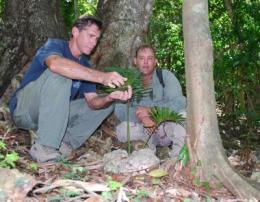
Rogers ResearchSometime after World War II the brown tree snake arrived as a stowaway on this U.S. Pacific island territory 6,100 kilometers west of Hawaii. It has since extirpated 10 of the island’s 12 native forest bird species. The remaining forest birds have been relegated to small populations on military bases, where the snakes are kept in check. In the first study of its kind, a rugby-playing researcher named Haldre Rogers is documenting how the forest itself is changing.

“There’s nothing in the forest on Guam,” Rogers says, “and when you hear anything you have to stop and say, ‘What was that?'”

Rogers is a doctoral student at the University of Washington in Seattle who once had a cell phone with the number 777-HISS during the three years she worked for the U.S. Geological Survey’s brown tree snake rapid response team. From 2002 to 2005, she estimates she nabbed about 100 snakes out of a population estimated in the hundreds of thousands.

These days, between tournaments in Hong Kong and Thailand with the Guam national rugby team, she has been busy collecting data on the movements of seeds and their ability to survive and grow in the forest. “People knew that the birds had disappeared, but nobody had taken the next step to see what impact that had,” she explains, “which is why it seemed like enticing research.”

Of the approximately 40 species of trees on Guam, about 60 to 70 percent once depended on birds to eat their fruits and disperse their seeds. The birds may have just nicked and dropped seeds somewhere along a flight path, or they could have swallowed the seeds, digested their tough coats, and pooped them out with a splatter of high-nitrogen urea.

Rogers went to neighboring islands that still have birds along with many of the same trees, collected seeds from the tree Premna obtusifolia, and brought them back to grow in a greenhouse on Guam. She found that seeds handled by birds are twice as likely to germinate as seeds that simply land on the forest floor. They also germinate about 10 days more quickly, giving them a better shot at evading seed-destroying rodents or fungi.

In another experiment, Rogers has found that seeds on Guam now always land directly in the shade of the mother tree and always have an intact seed coat. But seeds from neighboring islands that still have birds can sometimes end up 10 to 20 meters away from the mother tree, where they are more likely to find a sunny niche with fewer enemies. About 80 percent of these have had their seed coat removed, meaning they can germinate more quickly. Rogers presented this research at the Ecological Society of America meeting in Albuquerque this week. “It’s inevitable that there will be changes in the composition of the forest and in the spatial patterns of where trees are located,” she says.

These results, which are just the beginning of a larger study funded by the National Science Foundation and the U.S. Department of Agriculture, have wider implications for the dispersal of seeds and botanical life. Some 25 percent of U.S. birds are facing extinction, and many common U.S. bird species have declined by 50 to 80 percent since 1967. On islands, the situation is particularly dire, with 28 to 56 percent of species expected to be extinct by 2100, many due to introduced species. Hawaiians are dreading the day when the brown tree snake inevitably establishes itself there, despite careful monitoring of airports and shipping facilities.

Rogers is now looking for similar trends in a dozen other tree species on Pacific islands, and investigating how the absence of birds has affected populations of agricultural pests and spiders, which are 40 times more abundant on Guam than on neighboring islands. She says it is still too early to know if the brown tree snakes are just altering the distribution of trees in the forest, or if they could lead to a collapse of the island’s entire ecosystem.

“The brown tree snake is held up as textbook example of how a destructive invasive species can eradicate birds,” she says. “This shows that the effects of introduced predators reverberate through the ecosystem.”

By Brendan Borrell

References:
http://www.scientificamerican.com/article.cfm?id=avian-silence-without-bir

EPA Seeks Comments for Proposed Guam Ocean Disposal Area

0

Apparently Guam doesn’t have a place to dump dredged materials and now that I think about it a little, I don’t even really remember the on-land disposal of dredged materials. I guess I always thought they shipped the dredged materials to some other place that wanted to buy Guam dirt…I miss Guam’s red dirt.

Click on image to enlarge

Here is the news release by the EPA:

The U.S. Environmental Protection Agency is seeking comments to the draft environmental impact statement for a proposed ocean disposal site for dredged materials off Apra Harbor, Guam.

The draft EIS presents a detailed evaluation for designating a permanent ocean dredged material disposal site. An ocean dredged material disposal site provides an additional management option for clean sediments because existing land disposal sites are limited in capacity for future use.

“Dredging is essential for maintaining safe navigation at port and naval facilities in Apra Harbor and other locations around Guam,” said Alexis Strauss, water division director for the EPA Pacific Southwest Region. “The draft EIS identified a preferred location for an ocean dredged material disposal site, public review and input on the proposed locations is an important consideration when making the final site designation.”

There are two alternative locations for a permanent site. The proposed North site is around 13.7 nautical miles offshore of outer Apra Harbor, and in water depths ranging from 6,560 and 7,710 feet. The proposed Northwest location is approximately 11.1 nautical miles offshore of outer Apra Harbor, and in water depths ranging from 8,200 and 9,055 feet. There would be a maximum annual disposal limit of 1,000,000 cubic yards of dredged material for whichever site is chosen.

No actual disposal operations are authorized by a designation of a deep ocean site.Disposal of dredged material can only take place after a U.S. Army Corps permit is secured. Before ocean disposal may take place, dredging projects must demonstrate a need for ocean disposal and the proposed dredged material must meet the EPA’s ocean disposal criteria. Alternatives to ocean disposal, including the option for beneficial re-use of dredged material, will be evaluated for each dredging project.

The proposed site will be monitored periodically to ensure that the site operates as expected based on the EPA’s ocean site designation criteria. Field studies, modeling of sediment dispersion following dredged material disposal under various scenarios, constrained areas, and economic considerations are included in the evaluation.

The EPA is accepting written comments on the draft EIS from federal, state, and local governments, industry, non-governmental organizations, and the general public. Comments will be accepted for 60 days, beginning on August 6. A public meeting is scheduled at the following location and date: August 20, 2009 6:00-8:00 pm, at the Weston Resort Guam, 105 Gun Beach Road, Tumon, Guam.

This meeting will consist of two parts – the first being an informational session, and the second a public hearing where the public may comment on the DEIS. Comments presented at the public hearing will be recorded and responded to in the Final EIS.

The proposal can be viewed here:

1. Guam EPA’s Main Office, 17-3304 Mariner Avenue, Tiyan, Guam 96913
2. Nieves M. Flores Memorial Public Library, 254 Martyr Street, Hagatna, Guam 96910
3. Barrigada Public Library, 177 San Roque Drive, Barrigada, Guam 96913
4. Dededo Public Library, 283 West Santa Barbara Avenue, Dededo, Guam 96929
5. Maria R. Aguigui Memorial Library (Agat Public Library), 376 Cruz Avenue, Guam 96915
6. Rosa Aguigui Reyes Memorial Library (Merizo Public Library), 376 Cruz Avenue, Merizo, Guam 96915
7. Yona Public Library, 265 Sister Mary Eucharita Drive, Yona, Guam 96915
8. U.S. Environmental Protection Agency (EPA) Library, 75 Hawthorne Street, 13th Floor, San Francisco, CA 94105
9. U.S. EPA website: http://www.epa.gov/region9/
10. U.S. Army Corps of Engineers’ website: http://www.poh.usace.army.mil

Here are the links to the docs themselves so you don’t have to go to those places:

For further information and to submit comments, please contact: Mr. Allan Ota, U.S. Environmental Protection Agency, Region 9, Dredging and Sediment Management Team (WTR-8), 75 Hawthorne Street, San Francisco, California 94105-3901, Telephone: (415) 972-3476 or FAX: (415) 947-3537 or E-mail: [email protected].

References:
http://yosemite.epa.gov/opa/admpress.nsf/0/9a9036bd45f9cc898525760b005e8d4d?OpenDocument
http://www.epa.gov/region09/water/dredging/guam-eis.html

Pacific East Mall, El Cerrito, California

0

They took down the sign for the Pacific East Mall.  I wonder what’s going up in it’s place.


GI Joe: Rise of Cobra Movie

0

The movie comes out today! I can’t wait. Well, actually I can. There was a time I was hooked on the cartoon movie (about a year ago). I’m not too sure about the cast or storyline of this film, but just like Transformers, it’s not really about that. I think my boys might enjoy it, especially since they have a couple of the newer GI Joe Sigma 6 toys. Sigma 6 is a good series, and I wish the cartoon had taken off for a couple more seasons. Maybe I should introduce them to the classic cartoons from the 80s!

Snake-Eyes

Here are some of the cast (from IMDB):

  • Adewale Akinnuoye-Agbaje as Heavy Duty
  • Christopher Eccleston as McCullen / Destro
  • Grégory Fitoussi as Baron de Cobray
  • Joseph Gordon-Levitt as The Doctor / Rex
  • Leo Howard as Young Snake Eyes
  • Karolina Kurkova as Courtney A. Kreiger / Cover Girl
  • Byung-hun Lee as Storm Shadow
  • Sienna Miller as Ana / Baroness
  • David Murray as James McCullen – 1641
  • Rachel Nichols as Shana ‘Scarlett’ O’Hara
  • Kevin J. O’Connor as Dr. Mindbender
  • Gerald Okamura as Hard Master
  • Ray Park as Snake Eyes
  • Jonathan Pryce as U.S. President
  • Dennis Quaid as General Hawk

This film features the best operatives from around the globe as they take on a secret elite strike force. With Cobra Commander in the mix and a secret weapon stolen, the stakes have never been higher. The elite strike force is on a mission to stop Cobra from plunging the world into chaos, and it looks like plenty of action is on the way!

I can’t wait to see how this all unfolds at the box office! Plus, don’t forget to grab your digital copy once it’s out. It’s going to be an epic adventure! ??

Snake-Eyes

References:
http://www.imdb.com/title/tt1046173/
http://www.gijoemovie.com/

Goodies:
Poster

Tall and Shorty

0

I was relaxing on the beach in Pacifica and found these two rocks.