


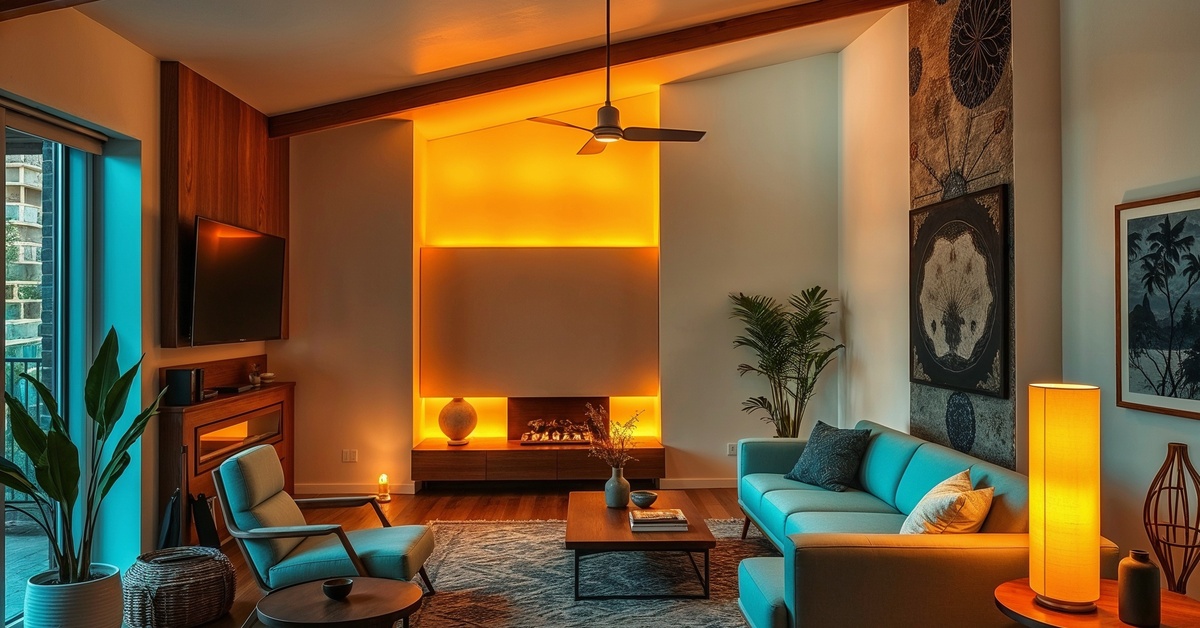
A living room can have beautiful furniture and still feel a little off once the sun goes down. Lighting often makes the difference. One bright ceiling fixture can flatten the room, while a mix of softer sources gives the space more warmth and depth. Layering lighting for a cozy living room helps create that relaxed, finished look without changing the furniture or repainting the walls.
The good news is that you don’t need a complicated lighting plan. A few well-placed lamps can change how the whole room feels at night.
Start With a Soft Base
Every room needs enough general light to feel comfortable, but the brightest bulb doesn’t always win. Ceiling fixtures or recessed lighting should provide a broad, soft layer that fills the room without feeling like a waiting area.
Adding a dimmer helps—full brightness for cleaning or searching, softer light for relaxation. Warm white bulbs suit living rooms for a gentle glow; cooler light may work in other spaces but can feel harsher next to warm wood or textiles.
Let Lamps Shape the Room
Lamps do much of the styling once the main light is in place. A floor lamp beside a sofa grounds the area. A table lamp softens a corner without over-lighting. Think of lamps as part of the furniture, not an afterthought; their height and shape balance large sofas or fill visual gaps.
Matching lamps aren’t necessary; rooms often feel more interesting when fixtures look collected over time, with one element like finish or shade color similar, but shapes varied.
Use Accent Lighting for the Pretty Bits
Accent lighting is where the room starts to feel styled rather than lit.
A small lamp on a console can draw attention to artwork. Light near a bookshelf can make that area feel warmer without turning it into the main focal point.
This layer works especially well in places that disappear once the overhead light goes off. A tiny lamp in a darker corner can make the room feel larger because your eye can see more of the space.
Lighting can have the same effect as other small updates that make a home feel more put together. You’re not redesigning the room. You’re helping the details you already like show up after dark.
Mix Lighting at Different Heights
Rooms feel more inviting when light comes from multiple levels. Ceiling fixtures sit high, while floor lamps bring light closer to eye level. Table lamps create softer pools of light, making seating areas cozy.
You don’t need a lamp at every height or corner, but spreading sources creates balance. A tall floor lamp works beside a sofa without a table, while a shorter lamp suits a console across the room. This variation prevents the lighting from appearing overly symmetrical or planned.
Make the Lighting Work With Your Decor
Assess current materials before selecting fixtures. Brass adds warmth with cream or dark woods; matte black offers contrast in pale or neutral rooms.
Glass bases feel lighter in small spaces. Lamp shades influence mood: fabric softens, directional suits reading areas. Fixtures should complement the room even when off, as lighting also decorates during the day, so shape and proportion matter.
Give Yourself Control Over the Mood
Living rooms serve many purposes. The lighting suitable for reading might differ from that needed for watching a movie. Dimmers enhance the flexibility of fixed fixtures, allowing you to adjust brightness easily. Lamps also provide the ability to illuminate specific areas of the room selectively, so you don’t have to light the entire space at once.
Smart LED lighting can offer another layer of flexibility. Depending on the product, you may be able to adjust brightness or color temperature to suit the time of day. Some options also connect to apps, which can make switching between settings easier.
That can be especially useful in open-plan rooms where the living area needs to shift from daytime activity to a softer evening mood.
Look at the Room After Dark
A lighting setup can look perfectly fine at noon and completely different at night.
Once the sun goes down, turn off the overhead light and look around. Notice where the room suddenly feels flat or where a corner seems to disappear.
Do a Quick Evening Check
A few questions can help:
- Does your main seating area have enough light?
- Is any bare bulb creating glare from the sofa?
- Does one side of the room feel darker than the other?
- Could a small lamp make a neglected corner feel intentional?
Sometimes the fix is surprisingly simple. Moving a lamp a few feet can change the balance without adding anything new.
Keep Bulb Colors in the Same Family
Even beautiful lamps can look odd together when bulbs emit different tones. One may glow soft and golden, another almost blue, making the room feel disconnected. You don’t need perfect matches, but nearby fixtures should relate.
Check color temperature to keep mood consistent. Brightness varies; a reading lamp might need more output than a decorative one. Style differences feel natural when light color stays within the same family.
Use Furniture to Decide Where Light Goes
Your furniture plan shows where lighting belongs. A reading chair in a corner might need its own lamp, while a sofa in the room’s center may be better with a floor lamp than a table lamp. Consoles and side tables are ideal for smaller fixtures. Before buying, walk around and observe movement; a lamp may look great but isn’t worth tripping over the cord.
Sightlines matter too. Sit where you normally relax and check whether the bulb or shade hits your eye directly. A tiny shift in position can make the light much more comfortable.
Work With Natural Light, Not Against It
Windows influence how a living room needs artificial lighting during the day. Some corners stay bright all afternoon but turn dark by dinner, while others need lamps before sunset. Observe these patterns to place fixtures wisely.
Portable lamps offer flexibility for furniture changes. Curtains also impact lighting at night by blocking exterior light, making spaces darker. Arrange evening lighting based on how the room feels once windows are out of view.
Create a Room That Glows Rather Than Glares
The best layered lighting for a cozy living room doesn’t make you notice the lighting first. It makes the whole room feel warmer and more finished.
Start with a gentle base and add light where needed, using lamps to highlight preferred corners and incorporate fixtures into decor. You don’t need all lights on at once; some evenings need a floor lamp, others a table lamp and accent light. Adjustable lighting makes the living room inviting and versatile.