


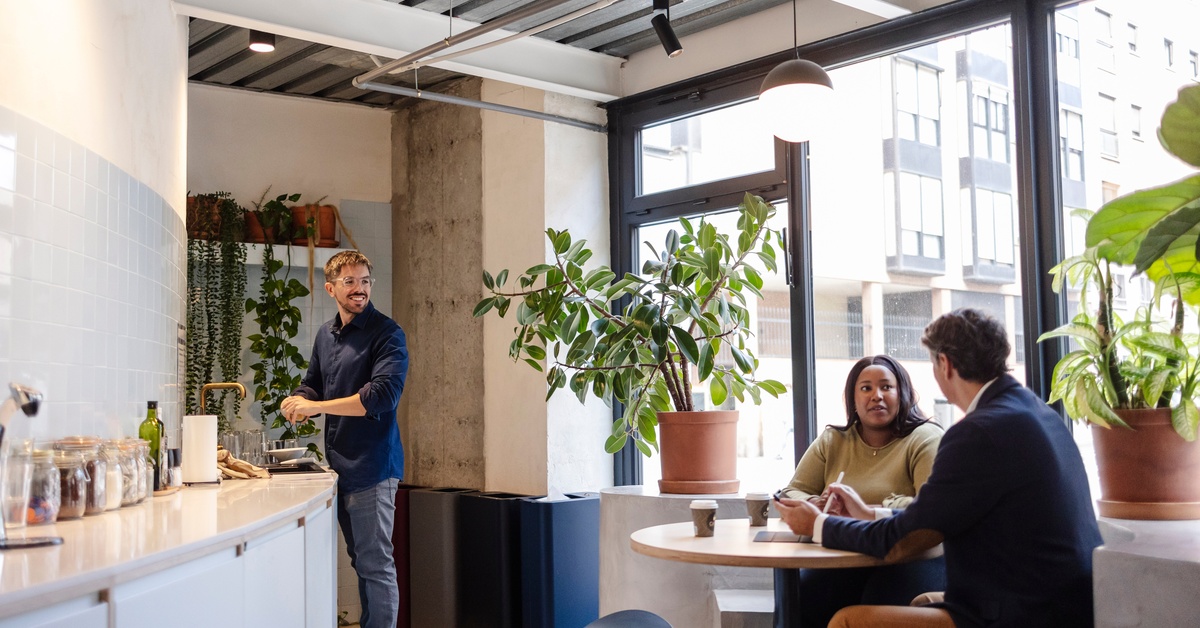
An office break room used to mean little more than a refrigerator, a microwave, and a table tucked into an unused corner. Today’s workplaces can do better. A thoughtfully planned break room gives employees a practical place to eat, recharge, talk with colleagues, and briefly get away from their workstations.
Creating a modern employee break room doesn’t require a huge renovation or an elaborate list of amenities. The most useful spaces focus on everyday needs: comfortable seating, convenient food and drink options, cleanliness, accessibility, and enough flexibility to accommodate different ways of taking a break.
Comfortable, Flexible Seating Options
Start with a basic question: how will employees actually use the room? Some people may want to eat lunch with coworkers, while others would rather sit quietly with a cup of coffee. A combination of seating options makes the room useful for both. Standard tables and chairs work well for meals, while a small sofa, lounge chair, or cushioned bench creates a more relaxed area.
If space is limited, flexible furniture can help. Lightweight chairs and smaller tables are easier to rearrange when employees need additional seating. Furniture should also be durable and easy to clean, particularly around eating areas.
Comfort matters, but so does separation from work. Whenever possible, the break room should feel noticeably different from desks, meeting rooms, and other task-focused areas.
Easy Access to Drinking Water
Drinking water is one of the simplest amenities to overlook because employees can usually find water somewhere in the building. Convenient access, however, makes the break room substantially more useful.
A water dispenser, bottle-filling station, or filtration system gives employees an easy place to refill reusable bottles throughout the day. Filtration can also address some of the taste and odor issues people associate with tap water. For workplaces considering their options, understanding the reasons for choosing filtered water provides useful context when deciding what type of drinking-water setup belongs in the space.
Placement matters as well. The water station should be easy to reach without creating congestion around the refrigerator, sink, or coffee maker.
Practical Food and Beverage Appliances
A break room doesn’t need to resemble a restaurant kitchen, but employees should be able to store and prepare basic meals. A refrigerator and microwave cover most everyday needs. Depending on the workplace, useful additions might include a toaster oven, electric kettle, coffee maker, or ice machine.
Before adding appliances, consider how many employees will use them at peak times. One microwave may be adequate in a small office but frustrating in a larger workplace where dozens of people take lunch at roughly the same time.
Appliances should also be intuitive to use and straightforward to maintain. Complicated equipment that is difficult to clean quickly becomes more of a nuisance than an amenity.
Storage That Keeps Clutter Under Control
Shared spaces accumulate things quickly; mugs, utensils, coffee supplies, reusable containers, napkins, condiments, and cleaning products all need somewhere to go. Cabinets, shelves, drawers, and clearly defined storage areas keep countertops available for food preparation. Employers can also establish designated areas for shared supplies and personal items so employees aren’t left guessing where things belong.
Consistent daily routines that keep businesses moving can make ordinary tasks easier to manage, and the same idea applies to maintaining a shared break room. Simple routines for restocking, cleaning, and removing expired food prevent small problems from becoming recurring frustrations.
A Convenient Cleanup Area
No amount of stylish furniture can compensate for a break room that feels dirty. If plumbing allows, a sink makes cleanup considerably easier.
Soap, paper towels or another hand-drying option, trash cans, recycling containers, and basic cleaning supplies should all be readily available. Trash and recycling bins need enough capacity for the number of employees using the room and should be positioned where they’re convenient without dominating the space.
Responsibilities should be clear, too. Employees can reasonably be expected to clean up personal spills and dishes, while routine deep cleaning and waste removal should have an established schedule.
Lighting That Changes the Atmosphere
Break rooms are supposed to provide a change of scenery, yet they sometimes have the same lighting as the rest of the workplace. Natural light is ideal when it’s available. Windows can make even a modest room feel more open and inviting. Where daylight is limited, warm, comfortable artificial lighting can help distinguish the break area from task-oriented workspaces.
Plants, artwork, and a restrained use of color can add personality without making the room distracting. The objective isn’t elaborate interior design; it’s simply to create a space where spending 15 or 30 minutes feels pleasant.
Charging and Everyday Technology
Phones and other personal devices are part of everyday life, so accessible outlets are a practical addition. USB charging ports or conveniently positioned electrical outlets can reduce the temptation to move furniture around in search of a socket.
Technology should generally remain secondary, though. A television might suit some workplaces, but constant news, advertising, or loud programming can make a shared room less relaxing. If a screen is included, establishing reasonable expectations around volume and use can help prevent disagreements.
Accessibility and Ease of Movement
Accessibility should be considered from the beginning rather than treated as an extra feature. Employees need enough room to move between tables, counters, appliances, and exits comfortably.
Frequently used items should be within practical reach, and seating should accommodate different physical needs. Clear pathways are especially important around popular areas such as refrigerators and beverage stations.
A good layout also reduces bottlenecks. Employees shouldn’t have to squeeze past someone heating lunch just to reach the sink or throw something away.
Build the Room Around Everyday Use
The best modern employee break room isn’t necessarily the one with the most expensive furniture or trendiest amenities. It’s the one that reliably supports what employees need during an ordinary workday.
Comfortable seating, accessible drinking water, useful appliances, organized storage, good lighting, and straightforward cleaning arrangements create a strong foundation. From there, employers can adapt the room to their team’s size, habits, and available space.
Ultimately, a break room succeeds when employees actually want to use it. Thoughtful, practical choices turn an overlooked corner of the workplace into a comfortable space to eat, talk, recharge, and return to work refreshed.